Save 30% On All ExactFlow Annual Plans

09Days01Hours51Minutes01Seconds
Claim Now

Ecommerce Warehouse Management System for Brands That Sell B2B and DTC

Managing inventory across warehouses, sales channels, and customer orders gets harder as your business grows. ExactFlow WMS is an ecommerce warehouse management system that connects receiving, storage, picking, packing, and stock counts with your sales channels. Get dedicated WMS workflows for $102 per month, billed annually, with order management and AI agents included.

  • 99.5% uptime SLA
  • 790+ integrations
  • Unlimited warehouses
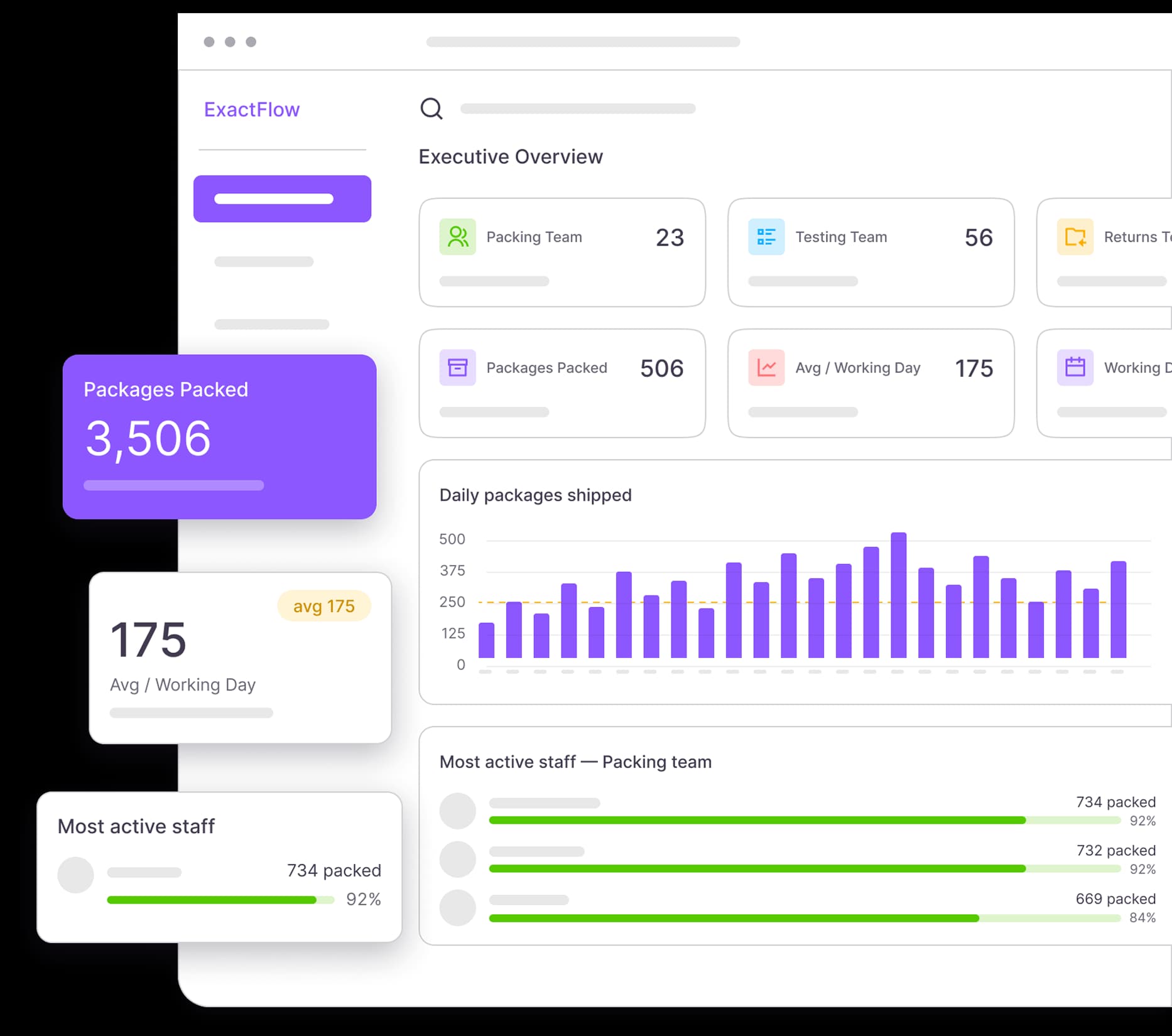
ExactFlow WMS executive overview showing packages packed, average output per working day, daily packages shipped and the most active packing staff
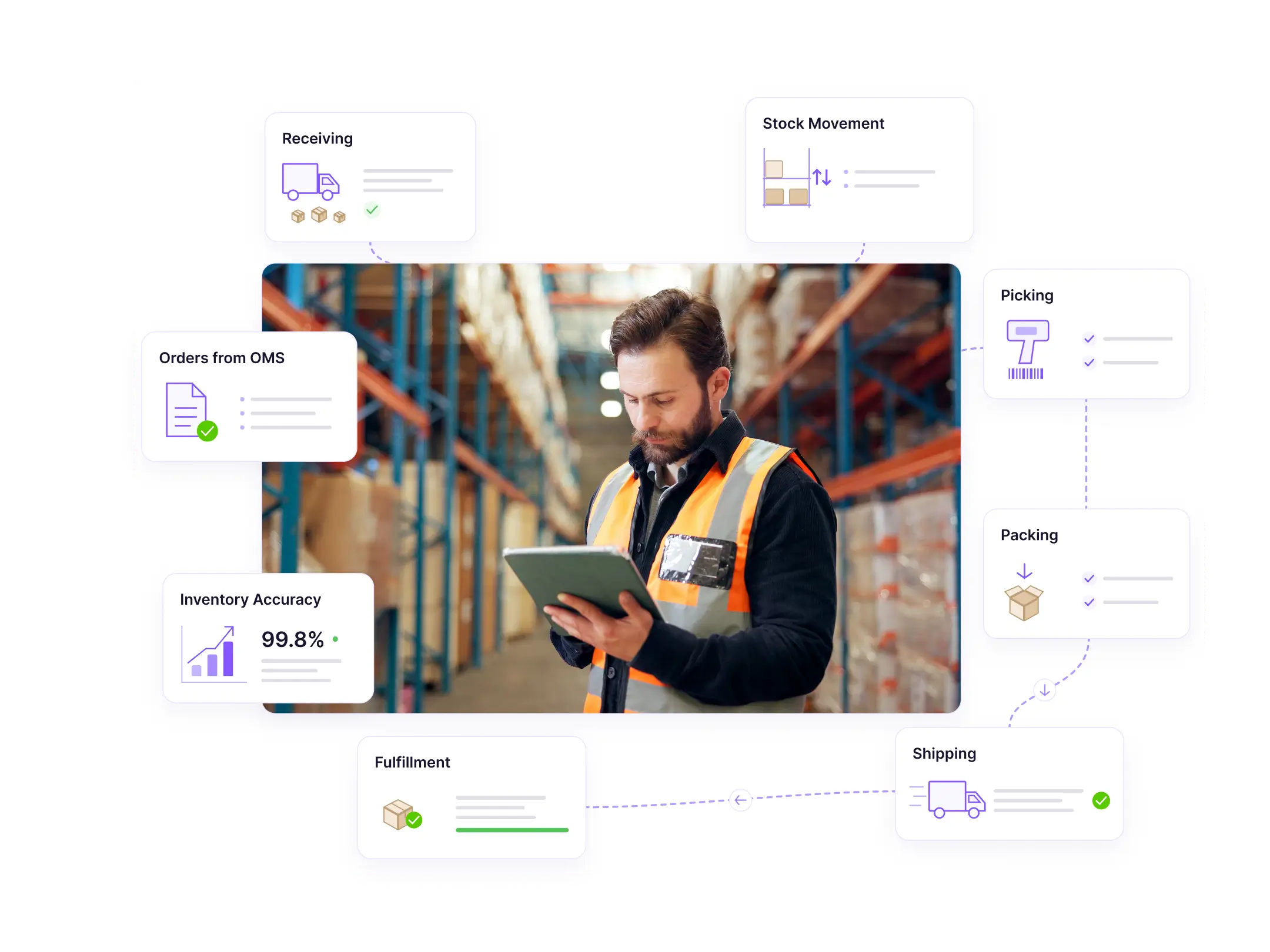
Warehouse worker checking a tablet, surrounded by the connected ExactFlow WMS steps: orders from OMS, receiving, stock movement, picking, packing, shipping, fulfillment and inventory accuracy

What Can an Ecommerce Warehouse Management System Help You Manage?

ExactFlow WMS connects the activities that keep your warehouse running, from receiving stock to picking, packing, and shipping orders. It gives your team one place to manage warehouse inventory, track stock movements, and keep fulfillment processes organized. Each step updates the same stock record, so nothing has to be re-entered by hand.

For ecommerce businesses, warehouse management for ecommerce also needs to work alongside online sales channels. ExactFlow connects warehouse inventory to the wider order workflow through the ExactFlow Order Management System. It can reserve stock when an order is imported and release it when the order is canceled.

This gives your team a connected warehouse inventory management workflow instead of relying on separate spreadsheets or disconnected processes. Inventory, orders, and fulfillment can work from the same data as your business grows. That means fewer manual updates and fewer chances for stock records to drift out of sync.

When Do You Need an Ecommerce Warehouse Management System?

The need for a WMS usually arrives at a specific point, not gradually. It tends to come when you add a second sales channel, a second warehouse, or a few thousand SKUs. At that point, spreadsheets fall behind sales, and stock levels stop matching what customers can buy.

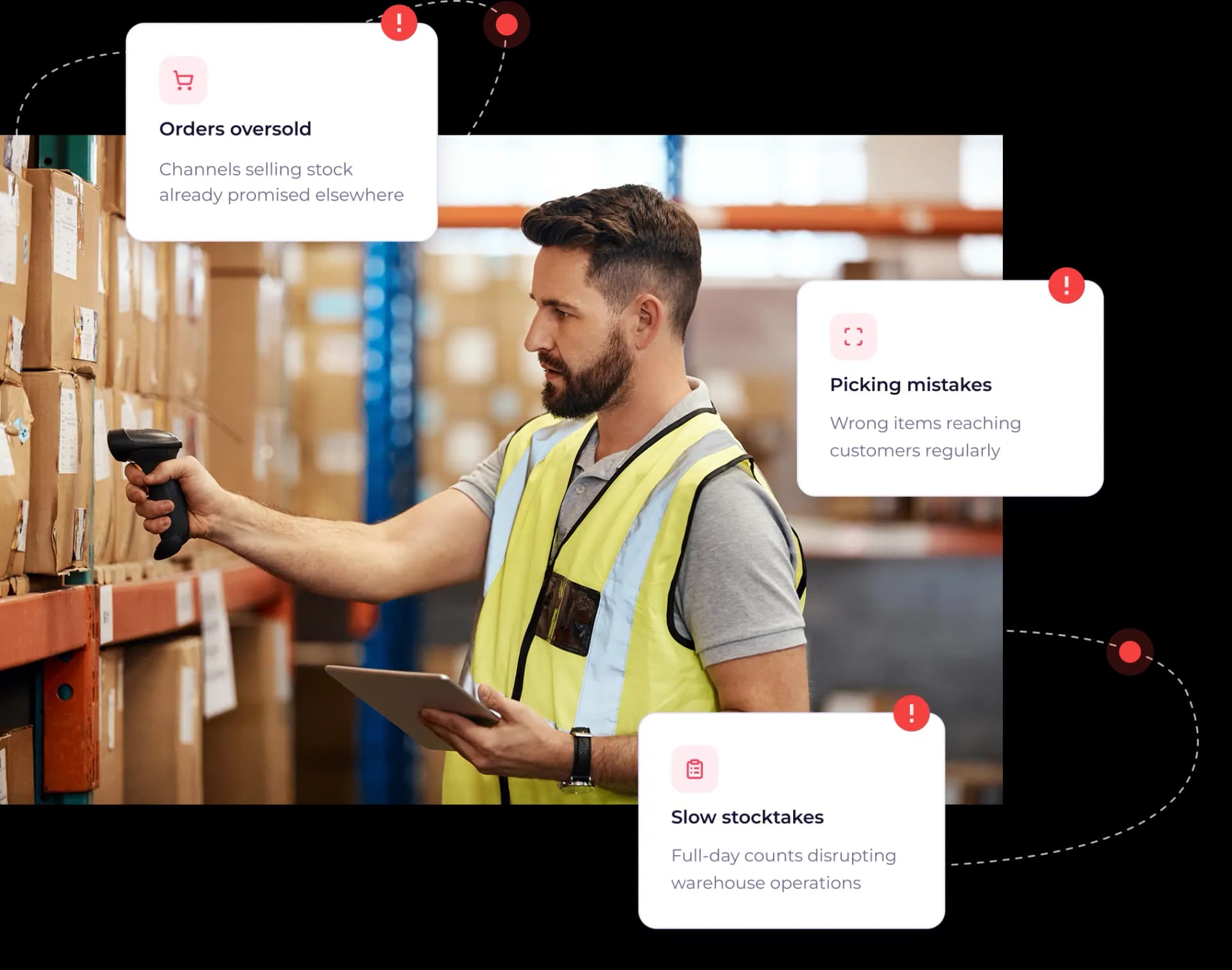
Watch for clear warning signs before that happens. Orders get oversold, picking mistakes reach customers, and stock counts take a full day to complete. If two or more of these sound familiar, your operation has likely outgrown manual tracking.

Warehouse worker scanning stock, with three warning signs that a business needs a WMS: orders oversold, picking mistakes and slow stocktakes

How ExactFlow WMS Keeps Your Warehouse Connected

ExactFlow WMS brings your warehouse management processes into one connected workflow. Your team can manage receiving, storage, inventory, picking, packing, and stocktaking without switching between separate systems. Everyone works from the same data, from the receiving dock to the packing bench.

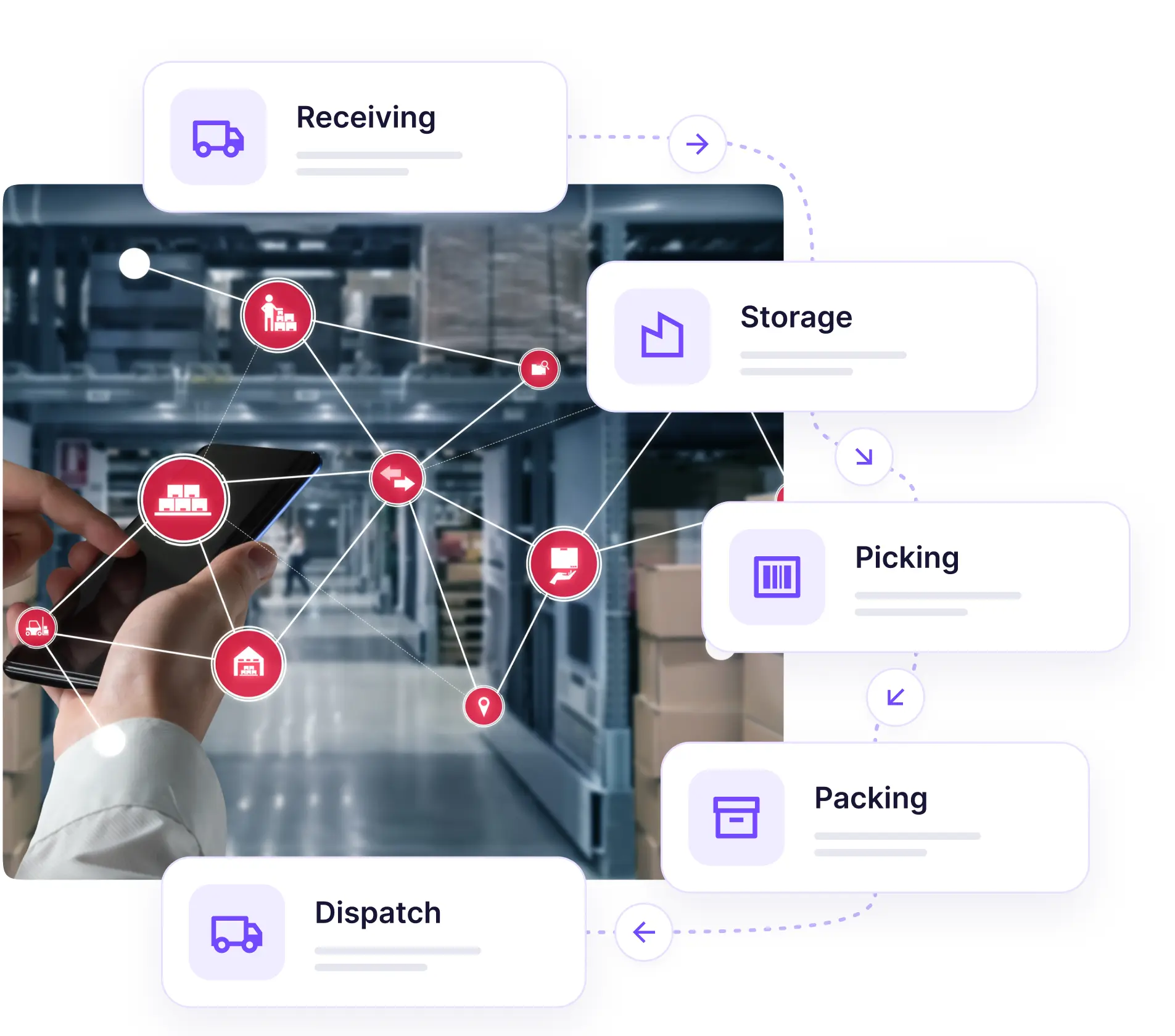
The workflow follows the movement of stock through your warehouse. Inventory enters through receiving, moves into storage, and becomes available for picking and packing when orders need to be fulfilled. Each move is recorded, so you always know where stock sits and what is ready to ship.

ExactFlow can manage inventory across multiple warehouses while connecting warehouse activity with your ecommerce order workflow. Your team can keep the same process as you add warehouses, sales channels, or more order volume. ExactFlow connects with Amazon, eBay, Shopify, and WooCommerce, among 790+ integrations.

Connected warehouse workflow in ExactFlow WMS: receiving, storage, picking, packing and dispatch linked step by step

What Are the Core Functions of a Warehouse Management System?

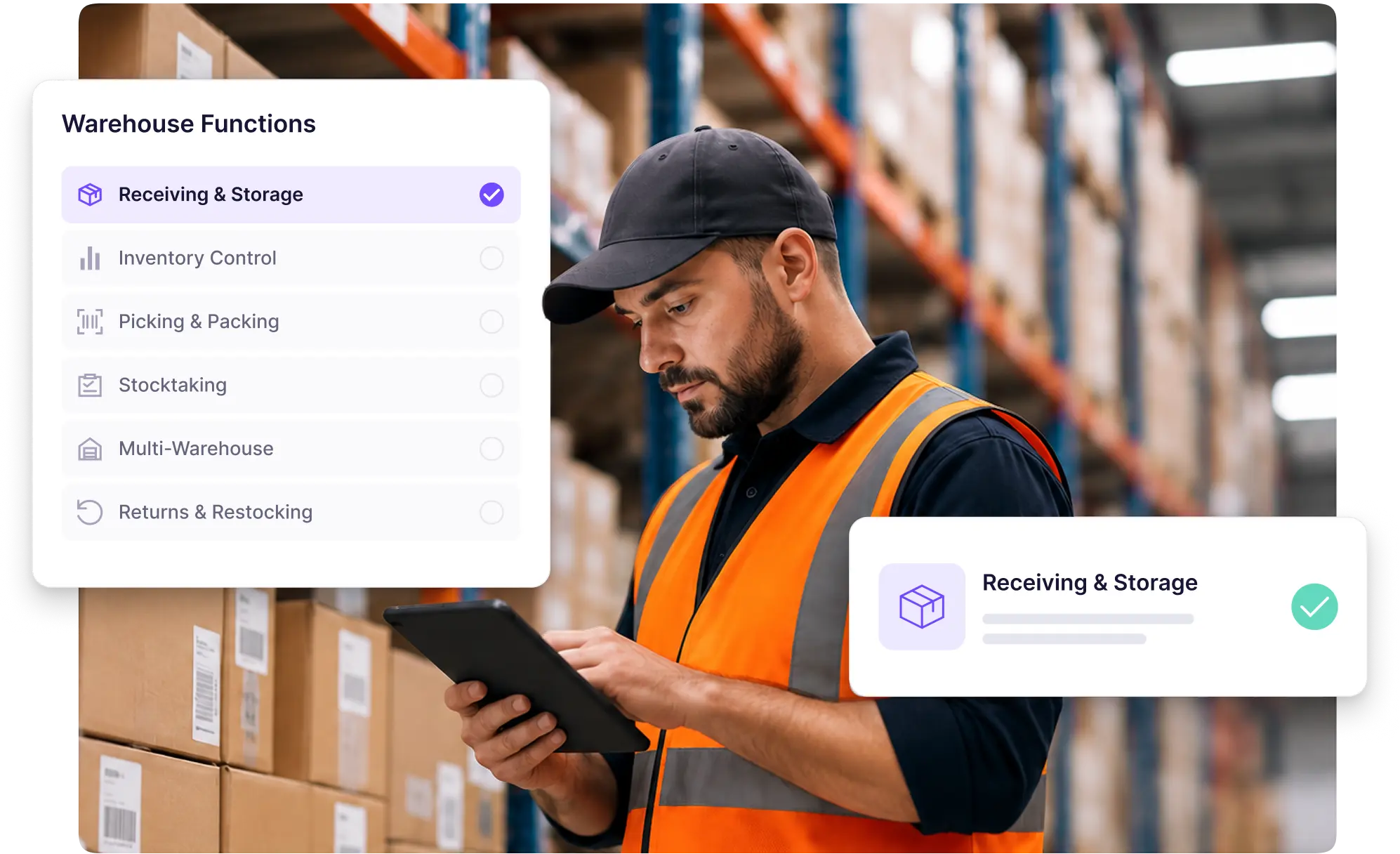
Six main warehouse management functions make up a WMS. Each function supports a different stage of warehouse operations, from receiving inventory to preparing orders for dispatch. The sections below explain what each function does and why it matters for ecommerce.

Bring incoming stock into the warehouse and record where products are stored. Locations can be set up by storage type, dimensions, and maximum load. Accurate locations also speed up picking, because staff walk straight to the right shelf.

Track warehouse inventory and stock reservations from one system. The system can calculate replenishment needs from sales data and create purchase orders for your suppliers. Available stock reflects what is on the shelf minus what is already promised to orders.

Guide warehouse staff through order fulfillment and verify products before dispatch. Each order moves from the shelf to the packing bench with a check at every step. Fewer picking mistakes mean fewer returns, exchanges, and support tickets.

Keep inventory records accurate through regular stock counts. Stocktaking becomes part of the warehouse workflow rather than a separate manual process. Partial counts let your team check one area at a time while orders keep shipping.

Manage inventory across multiple warehouses in a single system. This gives your team a central view of stock instead of maintaining separate records for each location. Adding a new location doesn't mean starting a new spreadsheet.

Bring returned products back into the warehouse workflow and manage their movement back into inventory. This keeps returns connected to the rest of your warehouse operations. Sellable items return to stock faster, so they can be sold again sooner.

Warehouse worker with a tablet next to the six warehouse management functions: receiving and storage, inventory control, picking and packing, stocktaking, multi-warehouse, and returns and restocking
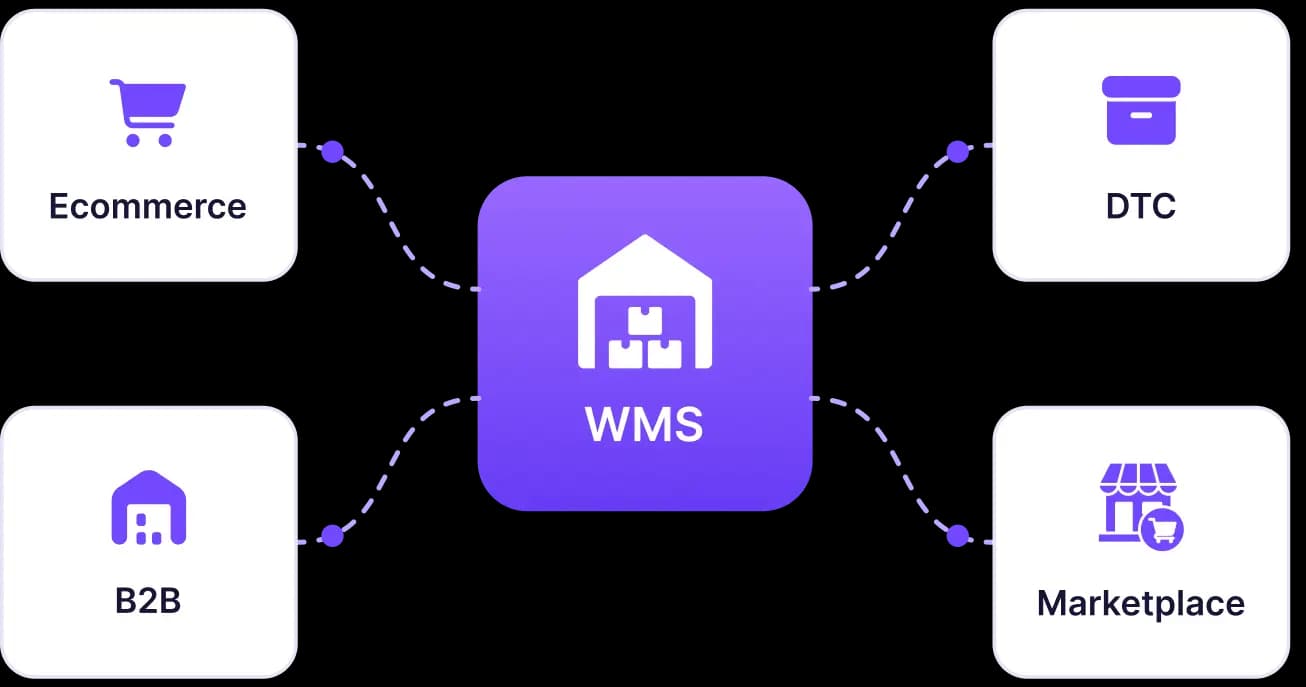
ExactFlow WMS at the center of ecommerce, B2B, DTC and marketplace order channels

One Warehouse Management System for Ecommerce, B2B, and DTC Orders

Traditional warehouse management software can manage warehouse processes, but ecommerce businesses often need more than basic inventory and fulfillment. ExactFlow connects warehouse operations with the wider ecommerce workflow, so B2B, DTC, marketplace, and wholesale orders can work from the same inventory. Your team avoids keeping separate stock records for business and consumer customers.

What Does ExactFlow Give You?

  • B2B and DTC fulfillment in one warehouse
  • One inventory view across different order types
  • Ecommerce and marketplace orders connected to warehouse stock
  • Different fulfillment workflows for different order profiles
  • Stock reservations tied to incoming orders
  • Multi-warehouse inventory management
  • Picking and packing workflows with barcode verification
  • Returns and restocking connected to warehouse inventory
  • Connected order and warehouse data instead of separate systems

This is particularly useful when a business sells the same products through several channels. Your warehouse team can handle wholesale orders, direct-to-consumer purchases, and marketplace sales without maintaining separate inventory processes. Stock stays accurate, whichever channel an order comes from.

One warehouse. Multiple sales channels. One connected inventory workflow.

How Does ExactFlow WMS Handle Warehouse Inventory Stock Management?

ExactFlow connects warehouse inventory management with order activity, giving your team a clearer view of available, reserved, and moving stock. Those figures update as orders are imported, canceled, and shipped. That view keeps every channel showing the right stock.

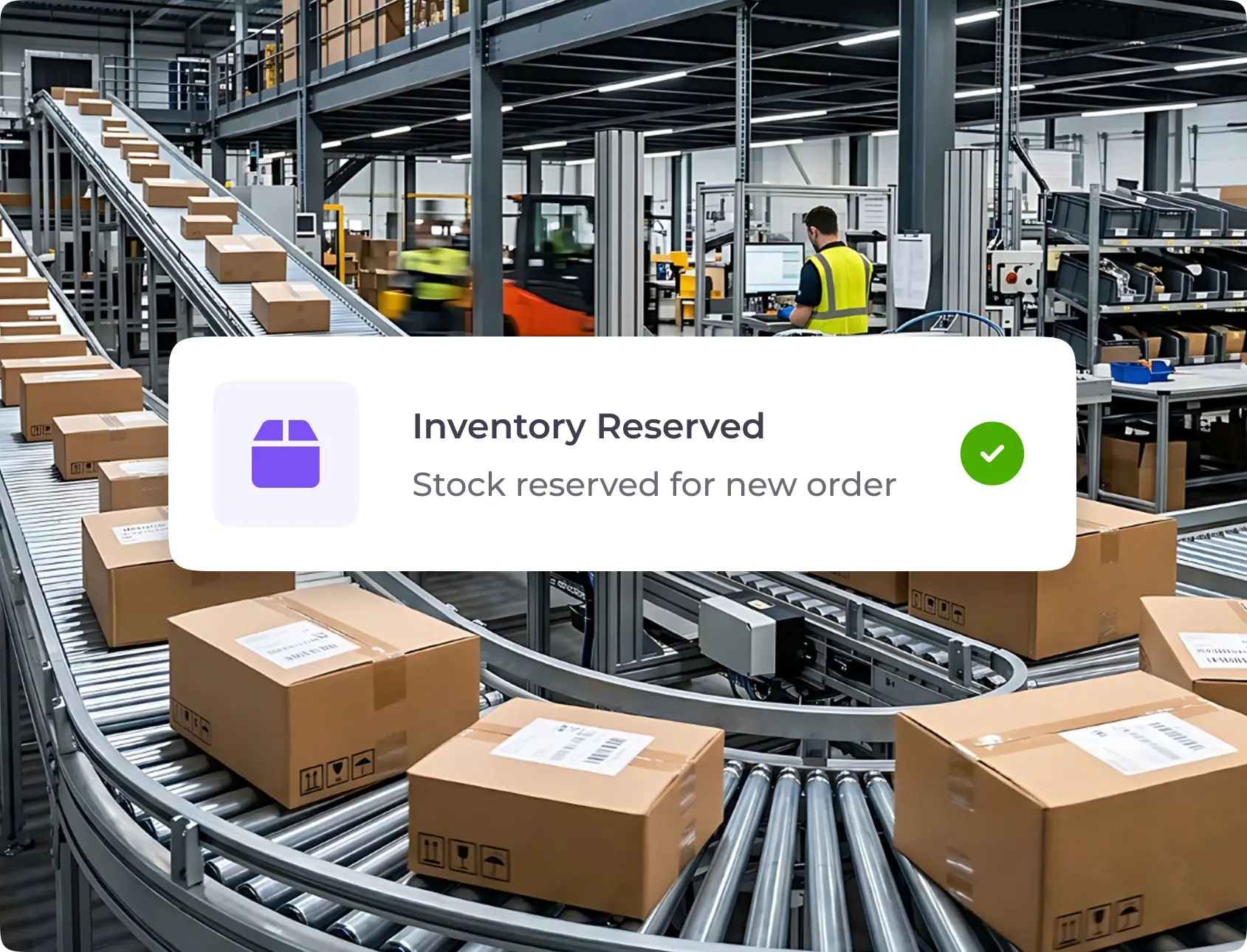
Reserve inventory when an order is imported and release it when the order is canceled. This helps keep available stock accurate from the moment of sale. Reservations close the gap between stores that deduct stock at sale and warehouses that deduct it at dispatch.

Connect warehouse inventory with your ecommerce and marketplace workflows. Keeping stock information connected helps reduce outdated quantities and the risk of overselling across sales channels. The AI Purchase Agent can use the same stock data to recommend reorders before items run out.

Keep returns connected to the original order and the warehouse workflow. The AI Support Agent answers customers' return questions, so your team can focus on processing the items. Retailers expect 19.3% of online sales to be returned in 2025, and 9% of all returns are fraudulent, according to the NRF and Happy Returns.

Parcels on a warehouse conveyor with an ExactFlow notification: inventory reserved, stock reserved for new order

Ecommerce Warehouse Management for Picking, Packing, and Fulfillment

Ecommerce picking is different from traditional warehouse picking. Orders often contain several different SKUs in small quantities, so efficient warehouse management for ecommerce needs clear picking and packing workflows. Clear workflows keep orders moving even when each one needs items from different parts of the building.

Give warehouse staff a structured process for working through each order line. Orders are grouped and picking tasks assigned by zone, priority, or shipping method, with pickers routed to the right locations. New staff can follow the same process as experienced pickers from their first day.

Use barcode scanning to check each SKU or EAN during picking. This adds a verification step before dispatch and helps catch wrong items before they reach the customer. That check matters because each order accuracy error can cost $10–$250, according to Honeywell.

Staff work directly from the warehouse floor using ExactFlow WMS on mobile devices and scanners. They can handle receiving, picking, packing, returns, and location checks without a workstation. It works on Android and iPhone and runs online, so stock levels update as each item is scanned.

Keep picked items connected to the order they belong to during packing. Your team can verify products and quantities before preparing the shipment for dispatch. This final check helps make sure every customer receives exactly what they ordered.

Once an order is packed, your team can create the shipment and generate the shipping label from the same workflow. ExactFlow connects with 40+ carriers, including DHL, FedEx, DPD, GLS, and InPost, and shipments can be created one at a time or in bulk. Tracking information syncs automatically, and customers receive shipment updates by email or SMS.

As order volume grows, structured picking and packing workflows give your team a consistent process to follow. This helps the warehouse handle more ecommerce orders without adding unnecessary manual steps. That consistency matters most during busy periods such as sales and holiday peaks.

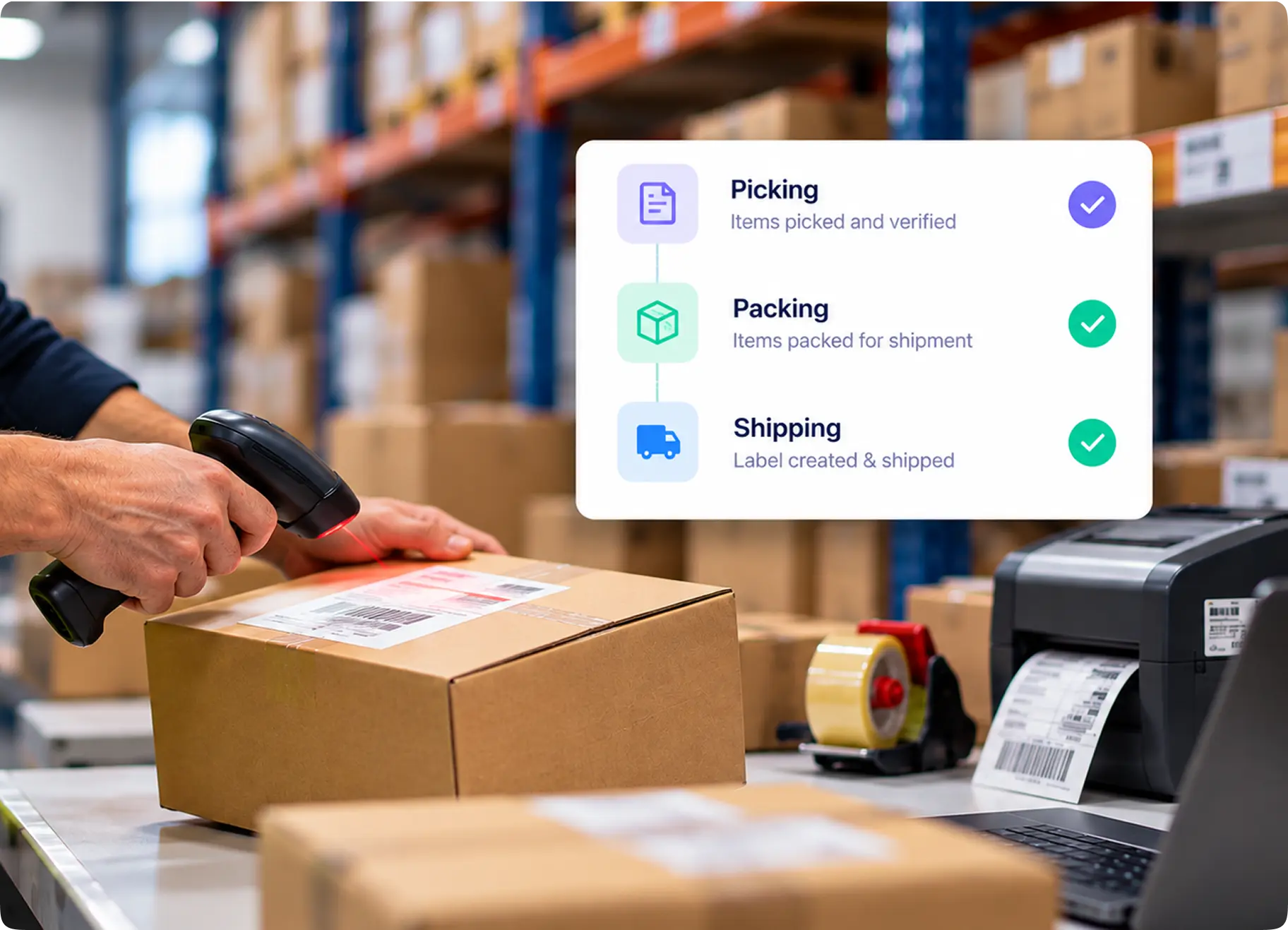
Barcode scanner checking a parcel at a packing station, with picking, packing and shipping steps confirmed in ExactFlow WMS

Keep Inventory Accurate With Stock Taking Software and Cycle Counting

  1. 01

    Choose What to Count

    ExactFlow WMS lets your team focus on specific products, locations, or warehouse areas instead of counting everything at once. Small, frequent counts are easier to schedule than one annual stocktake. They also catch errors before they spread across your sales channels.

  2. 02

    Check Physical Stock

    Check the actual quantity in the warehouse while regular fulfillment continues. This makes inventory checks easier to fit into daily warehouse operations. Nobody has to close the warehouse to get an accurate count.

  3. 03

    Compare and Reconcile

    Compare physical counts with the inventory recorded in ExactFlow WMS. When differences appear, your team can identify discrepancies and keep stock records accurate. Every correction is posted as a documented adjustment, so you can see what changed.

  4. 04

    Make It a Routine

    Use cycle counting as an ongoing part of warehouse inventory management rather than waiting for one large stocktake. Regular checks help your team maintain more reliable inventory data throughout the year. Counting fast-moving products before and after busy periods keeps stock accurate when it matters most.

What Should You Look for in the Best Warehouse Management System for Ecommerce?

Choosing a warehouse management system for ecommerce means looking beyond basic stock tracking. The right warehouse management software should support accurate inventory, efficient fulfillment, connected sales channels, and the operational needs of a growing business. Use the criteria below to compare any system on your shortlist.

Real-Time Inventory

Stock levels should reflect what is actually available, reserved, and moving through your warehouse. Without that view, channels can sell stock that is already promised to another order. Real-time stock data is the foundation for every other feature on this list.

Scalability

The system should support more products, orders, warehouses, and channels as your operation grows. A second warehouse or a new marketplace shouldn't mean switching systems. Check plan limits on orders, products, and users before you commit.

Integrations

Check that your warehouse management system for ecommerce connects with the platforms and tools your business already uses. Ask which marketplaces, stores, and carriers are supported out of the box. Missing integrations usually mean manual work or extra cost later.

Implementation and Support

Consider setup, training, onboarding, and ongoing support. A WMS needs to be practical for your team to adopt as well as capable enough for your operation. Ask each vendor what help you get during setup and in the first weeks after go-live.

How Long Does It Take to Implement an Ecommerce Warehouse Management System?

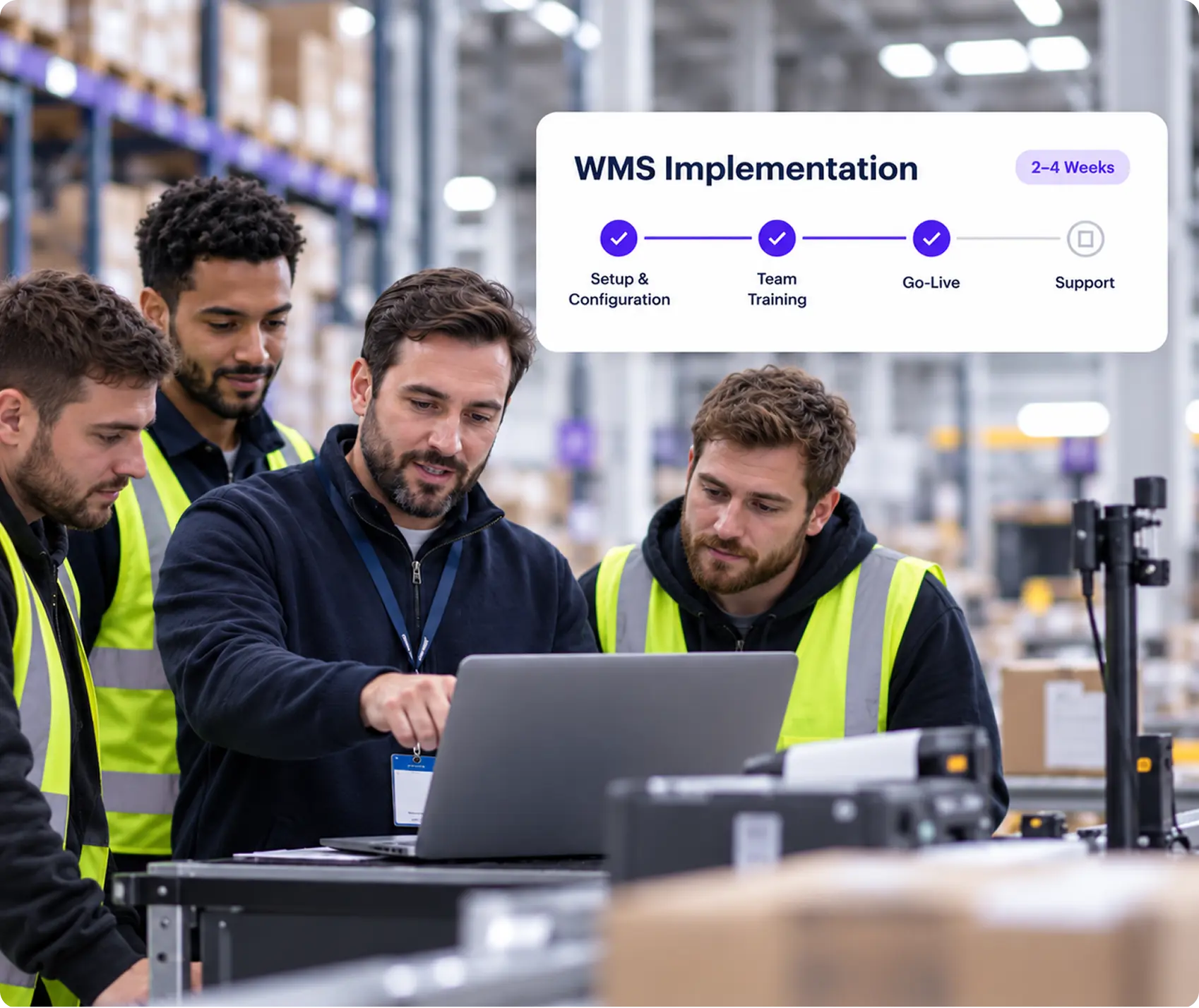
Implementing an ecommerce warehouse management system involves more than switching on new software. Your warehouse needs time to configure workflows, prepare inventory data, train staff, and move into daily use. Industry guides put cloud WMS setup anywhere from a few days to several months, and most ExactFlow customers go live within two to four weeks.

Start by configuring warehouses, inventory, locations, users, and fulfillment workflows around how your operation works. The goal is to have the system reflect your existing processes before your team goes live. Importing accurate product and stock data at this stage prevents problems after go-live.

Staff need to understand how to receive stock, manage inventory, pick orders, scan products, and complete stocktaking in the new system. Training gives the team time to learn the workflow before it becomes part of daily operations. Include everyone who receives, picks, packs, or counts stock, plus the managers who review adjustments.

A controlled rollout can help your team adjust without disrupting the entire warehouse. Start with the workflows and areas that matter most, then expand as the team becomes comfortable with the system. Many teams start with one area, such as receiving or picking, before rolling out across the whole warehouse.

A short-term productivity dip is normal when staff learn a new warehouse management software workflow. The aim is to keep this transition manageable through proper preparation, training, and support rather than expecting the warehouse to operate at full speed immediately. Planning for it openly helps your team stay patient while new habits form.

ExactFlow plans include free setup and onboarding, with support varying by plan. The ExactFlow team supports you through go-live, helping your staff as they start using the system. Growth Complete adds a dedicated account manager.

Warehouse team reviewing a laptop with a WMS implementation timeline of two to four weeks: setup and configuration, team training, go-live and support

Is an Online Ecommerce Warehouse Management System Better Than On-Premise?

For an ecommerce business, the choice between cloud and on-premise warehouse management software affects how your team accesses, maintains, and updates the system. Cloud systems are hosted by the provider, while on-premise systems run on your own servers. The table below compares the two for ecommerce teams.

Cloud WMSOn-Premise WMS
AccessAccess the system online from supported devicesUsually accessed through systems within the business environment
DeploymentHosted online without installing servers at the warehouseRequires local infrastructure and installation
MaintenanceProvider manages system infrastructure and updatesBusiness is responsible for infrastructure and maintenance
Warehouse accessTeams can access warehouse information wherever they have a connectionAccess depends on the local setup
ScalabilityEasier to extend as warehouses, users, and operations growExpansion may require additional infrastructure

Why Cloud WMS Fits Ecommerce

ExactFlow WMS is cloud-based, giving warehouse teams online access to their ecommerce warehouse management system without maintaining on-site server infrastructure. This makes it easier to connect warehouse operations with ecommerce stores, marketplaces, and other business systems. Updates arrive automatically, so your team always works on the latest version.

Why Not a Free Tool or an Enterprise WMS?

Free tools work well for basic picking and shipping, but B2B workflows and advanced warehouse controls can be limited. Dedicated WMS platforms add those controls, often with custom quotes and four-figure monthly fees. ExactFlow sits in between: an ecommerce warehouse management system with order management, B2B and DTC fulfillment, and free onboarding included.

Free toolsExactFlow WMSDedicated WMS platforms
Price$0$102/month, billed annually (Growth Complete)From about $1,000/month or custom quotes
Order management includedVaries by toolYes, ExactFlow Order Management SystemVaries by vendor
B2B and DTC from one inventoryVaries by toolYesVaries by vendor
AI agentsVaries by toolMultiple AI agents includedVaries by vendor
Setup and onboardingUsually self-serveFree; most customers go live in 2–4 weeksVaries by vendor

Testimonials

  • ExactFlow has made a big difference in how we handle orders. Before, our team spent hours preparing and checking orders, especially during busy periods. With the OMS, we can manage orders from different sales channels in one place and send them to our ERP automatically. This has made our daily work faster and helped us keep everything more organised.

    Jakub Nowicki

    Founder

  • Managing stock across several brands was always a challenge for us. We had to check different records to find the right stock quantities. With ExactFlow, we can see inventory for all our brands in one place and spend around 40% less time checking stock manually.

    Lukas Schneider

    Business Head

  • We needed a better way to check if our marketing campaigns were bringing results. I like that Marketing Flow lets us manage campaigns, plan content, and track leads in one place. It is much easier to see what is working and decide what we should focus on next.

    Emma Thompson

    Marketing Head

  • During busy periods, we receive many orders, and keeping stock accurate can be difficult. ExactFlow WMS reserves stock as soon as an order comes in, so the same product is not sold twice on different channels. This has helped us avoid stock problems and manage our warehouse more easily.

    Antoine Moreau

    Warehouse Manager

  • We sell on 5 marketplaces, so checking orders on each platform used to take up a lot of time. ExactFlow OMS brings all our orders into one inbox, making it easier to keep track of everything in one place. Even when order volumes increase, we can manage them without constantly switching between platforms.

    Oliver Harris

    E-commerce Director

  • Month-end was always stressful because we had to check sales and stock records separately. It took longer than it should have. Now we can find the numbers we need much faster in ExactFlow, and closing our monthly reports is now a lot easier.

    Jakub Lewandowski

    Finance Manager

How Much Does an Ecommerce Warehouse Management System Cost?

ExactFlow WMS is included in Growth Complete, giving businesses warehouse management alongside their wider ecommerce operations. Growth Complete costs $102 a month, billed annually, and includes free setup and onboarding. For comparison, Descartes lists its ecommerce WMS at $1,000 to $2,050+ a month on its website (as of October 2026).

Cloud WMS Pricing at a Glance

PlanPriceOrders / MonthProductsWMS
Free$0/month100500—
Starter$47/month annually1,00025,000—
Growth Complete$102/month annually3,000100,000Included
EnterpriseCustomCustomCustomIncluded

What Does Growth Complete Include?

Growth Complete includes the Warehouse Management System, multiple AI agents, unlimited users, unlimited warehouses, and unlimited marketplace and channel integrations. It also covers returns processing and automated return workflows. Support includes live chat and a dedicated account manager.

For larger or more complex operations, Enterprise provides a customized solution with pricing based on business requirements. It suits businesses with high order volumes, complex workflows, or custom integration needs. The team can scope a plan around your warehouse and channels.

FAQs

An ecommerce warehouse management system helps businesses manage the movement and storage of inventory, from receiving stock through picking, packing, and fulfillment. It connects warehouse processes with the wider ecommerce order workflow. For online sellers, it also keeps warehouse stock in sync with every store and marketplace.

The main functions of a warehouse management system include receiving, storage, inventory control, picking, packing, stocktaking, returns, and multi-warehouse management. A WMS brings these activities into one connected workflow. Running them from one system keeps stock data consistent across every step.

Yes. ExactFlow works as B2B warehouse management software and handles DTC, marketplace, and wholesale orders from the same inventory. Your team doesn't need separate stock records for business and consumer orders.

ExactFlow WMS controls inventory changes through system-managed stock movements. Each adjustment updates the stock record, and stock corrections stay documented, so your team can trace what changed. This stops staff from quietly overwriting counts during picking or packing.

Inventory management software tracks how much stock you have and where it sells, while a WMS manages how that stock moves inside the warehouse. A WMS adds receiving, storage locations, guided picking, packing checks, and stock counts. ExactFlow combines both, so stock levels and warehouse tasks run from the same record.

Yes, ExactFlow WMS groups orders into structured picking workflows so staff can pick them together. Picking tasks can also be assigned by zone, priority, or shipping method. Barcode scanning then checks each item before the order moves to packing.

Most ExactFlow customers go live with their ecommerce warehouse management system within two to four weeks. Setup time depends on how many warehouses, products, and sales channels you connect. Free onboarding helps your team configure workflows and train staff before go-live.

Ecommerce warehouse management software handles many small orders with several different SKUs, instead of a few large orders shipped by the pallet. Stock also has to stay in sync across several sales channels at once. That makes reservations, barcode-checked picking, and channel sync more important than in traditional warehousing.

A WMS connects warehouse inventory with order activity and sales channels. Features such as reservations, inventory synchronization, and stocktaking help businesses maintain accurate available stock and reduce the risk of overselling. Reservations matter most because they hold stock for an order from the moment it arrives.

Yes, ExactFlow WMS suits small and growing ecommerce businesses that run their own warehouse. Growth Complete includes the WMS for $102 a month, billed annually, with free setup and onboarding. You can start on a smaller plan and upgrade as your warehouse needs. It works on Android and iPhone and needs an internet connection, since every scan updates stock in real time.

Yes, ExactFlow WMS supports full and partial stocktakes, either manually or by barcode scan. Partial stocktakes let your team count specific products or locations instead of the whole warehouse, so counts can fit around daily operations. Differences between physical and system quantities are processed as documented adjustments.

Yes, ExactFlow WMS works on mobile devices and scanners. Staff can handle receiving, picking, packing, returns, and location checks from the warehouse floor. You can book a demo to check which devices suit your warehouse.

An ecommerce warehouse management system can cost anything from $0 for free tools to $1,000–$2,000+ a month for dedicated platforms. ExactFlow WMS is included in Growth Complete at $102 a month, billed annually. Setup and onboarding are free on every plan.

ExactFlow WMS is built for brands and wholesalers that run their own warehouse and sell B2B and DTC from the same stock. Every workflow, from reservations to returns, connects to your own sales channels and order data. If you run a 3PL, book a demo to check whether ExactFlow fits your client setup.

Test ExactFlow’s integrations, tools, and automation free for 30 days

Receive, store, pick, pack, and ship from one connected warehouse system.