
13 min de lectura
Cómo aumentar las ventas de e-commerce con IA: la guía completa de automatización (2026)
Por ExactFlow Team
2 de junio de 2026
Si opera una tienda en línea en 2026, es muy probable que se haya preguntado cómo aumentar las ventas de comercio electrónico más veces de las que puede imaginar. Los costos de adquisición de tráfico están aumentando, la competencia es intensa y las expectativas de los clientes son más altas que nunca. Las marcas que continúan expandiéndose son aquellas que utilizan la IA en segundo plano para automatizar el trabajo pesado, de modo que cada cliente reciba una experiencia más inteligente, rápida y personalizada.
Esta es una guía paso a paso sobre cómo se puede utilizar la IA para potenciar su embudo de ventas, atraer visitantes y convertirlos en clientes recurrentes leales y preferentes.
Por qué la IA falta en su estrategia de crecimiento
La mayoría de las marcas se guían por campañas, no por sistemas. Lanzan nuevos anuncios, descuentos y contenidos, pero todo lo que ocurre entre bastidores se gestiona de forma manual. La IA transforma su tienda en una máquina de aprendizaje que no deja de mejorar.
En lugar de que la forma de aumentar las ventas de comercio electrónico sea una especie de juego de adivinanzas, la IA proporciona patrones y predicciones: qué productos se venden mejor, qué segmentos aceptan qué ofertas y dónde se pierde a la gente en el embudo de ventas.
.webp)
Para obtener una perspectiva más amplia sobre el papel cambiante de la IA en el comercio minorista en línea, resulta útil analizar los efectos de la IA en el comercio definidos por McKinsey.
Paso 1: Utilice la IA para comprender lo que realmente está sucediendo
Debe tener una imagen clara de su rendimiento actual antes de realizar cualquier cambio.
Analítica e información analítica impulsadas por IA
Las herramientas de IA pueden filtrar a través de miles de sesiones, pedidos y eventos para mostrar lo siguiente:
- ¿Qué páginas y productos generan más conversiones?
- ¿Cuáles son las fuentes de tráfico que generan visitantes con alta intención de compra (no solo clics)?
- Dónde abandonan los usuarios principalmente el flujo de pago.
Esta claridad es oro cuando se toma en serio cómo aumentar las ventas de comercio electrónico. Le indicará qué debe solucionar inicialmente, en lugar de forzar cambios aleatorios esperando que funcionen bien.
Paso 2: Corrija la experiencia en el sitio con IA
Ninguna cantidad de tráfico en su sitio lo salvará si este se vuelve confuso o lento.
Búsqueda y navegación más inteligentes
La búsqueda impulsada por IA puede comprender errores tipográficos, el lenguaje humano y la intención de búsqueda. También ayuda a los visitantes a encontrar lo que quieren decir y no solo lo que escriben. Eso por sí solo contribuye en gran medida a aumentar las ventas en un sitio de comercio electrónico, ya que muchos usuarios abandonan durante el proceso de búsqueda tradicional.
Recomendaciones personalizadas
La IA puede mostrar:
- Productos vistos recientemente y la sección "también te puede gustar".
- Paquetes y complementos que coincidan con lo que hay en el carrito.
- Páginas de inicio creadas dinámicamente que cambian según el visitante.
Los pequeños detalles hacen que las compras se sientan menos genéricas y más seleccionadas, y son un indicador directo del aumento de las ventas de comercio electrónico sin necesidad de gastar más en publicidad.
Para observar el marco utilizado en plataformas más grandes, consulte cómo se explica la personalización del escaparate a través de la IA en Shopify.
Paso 3: Convierta el soporte en un motor de conversión con IA
Este tipo de soporte no sirve solo para resolver problemas, sino que, cuando se hace correctamente, es un sólido canal de ventas.
Chatbots de IA como su equipo de preventa 24/7
Los chatbots de IA modernos pueden:
- Responder a las preguntas frecuentes sobre envíos, tallas y devoluciones.
- Ayudar a los compradores en la comparación de productos o en la selección de la variante correcta.
- Rescatar sesiones en riesgo ayudando cuando alguien duda en el momento del pago.
Si se hace bien, esto contribuirá directamente a aumentar las ventas de comercio electrónico al disipar las dudas en el momento, en lugar de hacerlo después de que el visitante ya se haya ido.
Traspaso inteligente a humanos
La IA transfiere una conversación a un agente real una vez que las preguntas se vuelven complicadas para proporcionar el contexto completo. La razón detrás del éxito de "Cómo aumentar las ventas en un sitio de comercio electrónico" es que una experiencia de soporte más rápida e inteligente es un componente fundamental, ya que las personas se influyen más cuando sienten que son comprendidas y respaldadas.
Paso 4: Automatice su marketing con IA
Los mensajes en el sitio, el correo electrónico y los SMS siguen representando una parte importante de los ingresos cuando son relevantes.
Flujos basados en el comportamiento
La IA puede activar flujos en función de las acciones reales de los clientes:
- Navegan pero no añaden al carrito
- Añaden al carrito pero no compran
- Compran una vez y luego no vuelven a interactuar
Todos los escenarios pueden evocar un viaje diferente: recordatorios, prueba social, educación o una oferta por tiempo limitado. Es una excelente solución para aumentar las ventas de comercio electrónico, ya que recupera los ingresos que probablemente ya daba por perdidos.
Segmentación y contenidos más inteligentes
En lugar de dirigirse a todo el mundo, la IA crea microsegmentos y recomienda qué tipo de producto o mensaje sería el adecuado para el grupo. La relevancia aumenta, las bajas de suscripción disminuyen y la forma de aumentar las ventas en un sitio de comercio electrónico se vuelve menos una cuestión de enviar más y más mensajes.
Para ponerlo en una perspectiva de marketing más amplia, sería beneficioso descubrir cómo HubSpot explica el proceso de segmentación y automatización asistido por IA.
Paso 5: Optimice los precios, los paquetes y las promociones con IA
Sus ofertas son tan generosas como su tráfico.
Precios dinámicos y prueba de descuentos
La IA puede:
- Probar con varios puntos de precio y supervisar el efecto en las ganancias, no solo en los ingresos.
- Determinar cuándo los descuentos atraen a nuevos clientes en lugar de aplicar descuentos a quienes ya habrían realizado compras de todos modos.
En caso de que esté explorando cómo aumentar las ventas de comercio electrónico de forma sostenible, esto le permitirá evitar el exceso de descuentos y seguir siendo competitivo.
Paquetes inteligentes y venta cruzada
De acuerdo con el historial de pedidos, la IA puede recomendar lo siguiente:
- Paquetes de productos que siempre se venden juntos.
- Sugerencias que probablemente coincidan con los productos del carrito.
- Ventas adicionales (upsells) después de la compra de lo que se acaba de adquirir.
Es un enfoque práctico y de baja fricción para aumentar las ventas en un sitio de comercio electrónico mediante el incremento del valor medio del pedido (AOV).
Paso 6: Cierre el círculo con IA poscompra
Los nuevos clientes no son la única fuente de crecimiento. Este consiste en retener a los ya existentes.
Comunicación proactiva
La IA puede realizar un seguimiento de la entrega y enviar automáticamente lo siguiente:
- Actualizaciones de envío y notificación de retrasos
- Seguimientos en casos en los que algo parezca sospechoso (como entregas fallidas repetidas)
Una experiencia posventa fluida genera confianza, minimiza la cantidad de tickets de soporte e impulsa silenciosamente el crecimiento de las ventas de comercio electrónico a largo plazo.
Retención predictiva y recuperación de clientes
Utilizando la información sobre la pérdida de clientes, la IA puede prevenir el abandono detectando quién podría dejar de comprar e iniciando campañas de recuperación antes de que se olviden de usted. Es una de las herramientas más eficaces para vender más productos en una plataforma de comercio electrónico sin gastar más dinero en publicidad.
To tener una visión más cercana de la retención basada en IA, puede ver la analítica predictiva relacionada con el comercio electrónico analizada por Klaviyo.
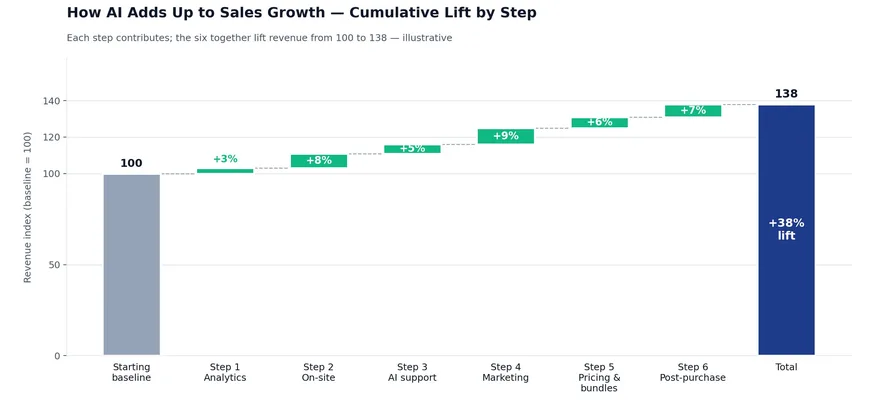
Tabla 1 · La pila de ventas de IA de seis pasos — una referencia del manual de estrategias
| Paso | Área de enfoque | Táctica específica de IA | Métrica principal a medir | Aumento típico |
|---|---|---|---|---|
| 1 | Analítica e información analítica | Análisis de embudo impulsado por IA para identificar los puntos de abandono con mayor impacto | Ingresos por visitante por canal | +2–5% (fundamental) |
| 2 | Experiencia en el sitio | Búsqueda en lenguaje natural, recomendaciones personalizadas, páginas de inicio dinámicas | Tasa de conversión y tasa de adición al carrito | +6–10% |
| 3 | Soporte de IA y chat | Chatbot de preventa 24/7 con traspasos inteligentes y rescate de sesiones en riesgo | Tasa de conversión asistida por chat | +3–7% |
| 4 | Automatización de marketing | Flujos de correo electrónico/SMS activados por el comportamiento + microsegmentación por IA | Ingresos recuperados de los flujos de automatización | +7–12% |
| 5 | Precios y paquetes | Pruebas de precios dinámicos, paquetes recomendados por IA, ventas adicionales poscompra | Valor medio del pedido (AOV) | +5–8% AOV |
| 6 | Poscompra | Comunicaciones proactivas de entrega + detección predictiva de abandono y activadores de recuperación | Tasa de repetición de compra y LTV | +5–10% LTV |
Conclusión
La verdadera respuesta a la pregunta de cómo aumentar las ventas de comercio electrónico en 2026 no es publicar más anuncios, sino crear sistemas más inteligentes. La IA puede puntuarlo por conocer sus datos, mostrarle un viaje personalizado, automatizar su marketing y recompensar a sus clientes después de una compra, sin añadir más trabajo manual a su operación.
Al considerar la forma de impulsar las ventas de comercio electrónico como un problema de automatización de embudo completo, y no como un problema de tráfico, se abren las puertas a docenas de pequeñas victorias acumulativas: mejor búsqueda, recomendaciones más inteligentes, mensajes más relevantes, menos ventas perdidas o clientes que se encuentran en el lugar equivocado.
ExactFlow vincula sus herramientas y automatiza los flujos de trabajo principales del comercio electrónico a través de agentes de IA para ayudar a realizar más ventas con menos trabajo manual y resultados predecibles. Contáctenos ahora.
Comience con pequeños pasos abordando un solo cuello de botella a la vez y continúe consultando a la IA dónde puede reducir la fricción. Gradualmente, aumentar las ventas de comercio electrónico deja de ser una pregunta para convertirse en una especie de hábito integrado en las operaciones diarias de su tienda.
Preguntas frecuentes
1. ¿Cuál es el primer paso para aumentar las ventas de comercio electrónico con IA?
El primer paso para aumentar las ventas de comercio electrónico con IA es obtener una visión clara de su embudo. Obtenga una visualización de dónde abandona la gente, qué productos convierten realmente y qué canales atraen a los clientes con alta intención mediante analíticas impulsadas por IA, y luego identifique las fugas más grandes y soluciónelas primero.
2. ¿Cómo aumentar las ventas en un sitio de comercio electrónico sin gastar más en publicidad?
Cuando necesite aumentar las ventas en una plataforma de comercio electrónico sin un presupuesto publicitario adicional, comience con la conversión y la retención: mejore la búsqueda y las recomendaciones, incorpore el chat de IA para encontrar respuestas rápidas, optimice el proceso de pago y personalice el seguimiento para recuperar los carritos de compra abandonados y volver a conectar con los compradores anteriores.
3. ¿La IA solo es útil para las grandes marcas de comercio electrónico?
No. La IA se puede utilizar en chats, recomendaciones, segmentación básica y flujos de automatización sencillos, incluso en tiendas más pequeñas. El truco consiste en utilizarla solo para problemas específicos, no todos a la vez, de modo que cada cambio deje claro cómo aumentar las ventas de comercio electrónico de forma cuantificable.
4. ¿Cómo sé si mis esfuerzos de IA realmente están aumentando las ventas de comercio electrónico?
Mida las métricas principales antes y después del cambio: tasa de conversión, valor medio del pedido, tasa de repetición de compra e ingresos por visitante. Cuando los cambios impulsados por la IA sean efectivos, estas cifras aumentarán de forma constante y usted tendrá una idea más clara de cómo aumentar las ventas de comercio electrónico informada por datos, en lugar de por adivinanzas.