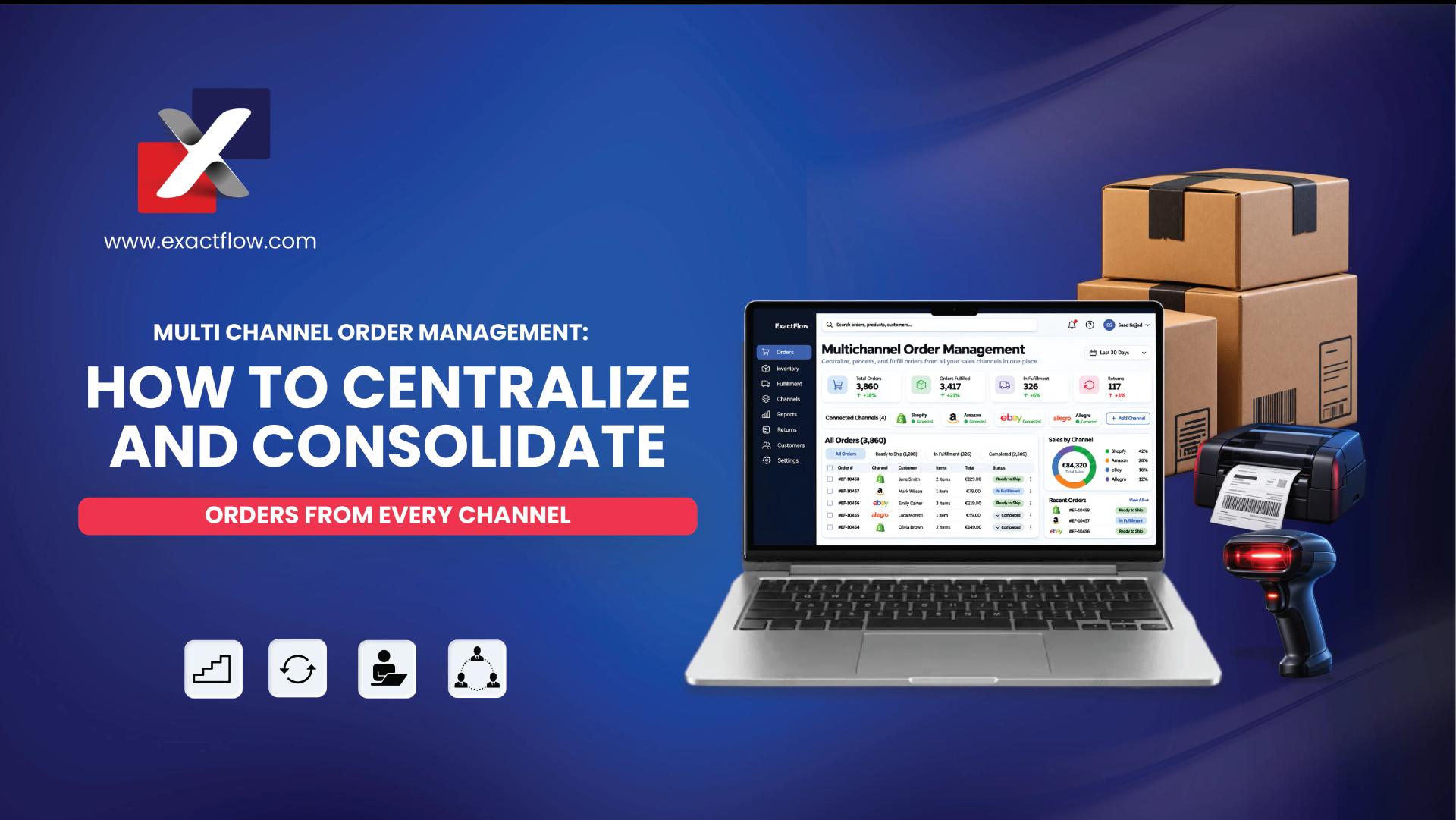
Gestión multicanal de pedidos: Cómo centralizar y consolidar pedidos de todos los canales
¿Vendes en Shopify, Amazon, eBay y otras plataformas? Esta guía explica cómo la gestión multicanal de pedidos agrupa todos los pedidos en un único sistema, cómo agrupar los pedidos de un mismo comprador y combinar los pedidos de Shopify, y qué espera cada plataforma de los vendedores.

Por Liba Yousuf
¿Qué es un backorder? Significado, causas y cómo gestionarlo
Sold out but more stock is on the way? This guide explains what a backorder is, how it differs from out-of-stock and pre-order items, what causes backorders, and how to manage and prevent them without losing sales or customer trust.
Por Liba Yousuf
Proceso Order to Cash (O2C): 8 pasos, KPIs y automatización
Follow an order from checkout to cash in the bank. This guide walks through the 8 steps of order to cash (O2C), explains how it differs from P2P and quote to cash, and shows which KPIs reveal delays and how automation and AI agents help you get paid faster.
Por Liba Yousuf
Fulfillment de Pedidos E-commerce: El Proceso en 7 Pasos, Modelos y Automatización
Learn what order fulfillment is, the 7 steps from receiving to returns, which fulfillment model fits you, and how to automate pick, pack, and ship.
Por Liba Yousuf
¿Qué es la gestión de pedidos? Proceso, etapas y cómo funciona un OMS
La gestión de pedidos (Order Management) cubre cada paso desde la compra hasta la entrega. Esta guía explica las 4 etapas, cómo funciona un sistema de gestión de pedidos (OMS), qué funciones y KPIs son importantes y cuándo una empresa de comercio electrónico necesita uno.
Por Liba Yousuf
How to Handle Split, Partial and Backordered Shipments Across Channels
A split shipment sends every ordered item in two or more parcels from different warehouses. A partial shipment sends only what's in stock and leaves the rest owed. A backorder accepts the order with nothing in stock and ships once your supplier delivers.
Reorder Level Planning for Smarter Stock Control
Inventory shortages rarely happen by surprise. They occur when products keep selling while teams delay reordering. A clear reorder point helps e-commerce businesses stay ahead of demand, prevent stockouts, reduce lost sales, and avoid rushed purchasing.
10 Multichannel E-commerce Operations Problems (and How to Fix Them)
Ecommerce operations problems are process, data, and system issues that make it harder to manage inventory, orders, products, fulfillment, customers, and reporting across multiple sales channels.
Multichannel vs Omnichannel E-commerce: What's the Difference?
Ecommerce is no longer just about selling across more channels. It’s about connecting the channels you already use. Knowing the difference impacts inventory, customer data, fulfillment, and how efficiently your team operates.
Multichannel selling basics for online stores
Modern online sellers rarely rely on just one sales channel. They sell through stores, marketplaces, and social platforms to reach customers wherever they shop. Understanding multichannel ecommerce helps you grow reach without losing control of inventory, orders, and product data.
The hidden cost of ecommerce operations spreadsheets
Spreadsheets work initially but become unreliable as orders, channels, and inventory grow. A multichannel operations platform centralizes inventory, orders, and product data, reducing manual work and errors while helping your business scale efficiently.
How to Manage EU Marketplaces (Allegro, Kaufland, bol.com) From One Platform
Selling across European marketplaces gets complicated fast. Inventory, pricing, and listings all need to stay aligned across countries and channels. A single platform can reduce manual work, improve accuracy, and help you scale without losing control.
How to Automate E-commerce Returns & Refunds
Manual returns eat time, create errors, and frustrate customers quickly. Slow refunds also tie up support teams and damage repeat purchase behavior. A better returns workflow cuts handling time, reduces mistakes, and gives customers a smoother post-purchase experience.
How to Automate Order Management Across Multiple Marketplaces
Managing orders by hand works until volume rises. Then delays, mistakes, and inventory mismatches start compounding fast. Automation removes repetitive work, speeds up fulfillment, and gives multichannel sellers a cleaner way to scale.
What e-commerce automation costs
Automation pricing varies by platform and features. Most multichannel automation tools cost a few hundred to several thousand dollars per month, depending on order volume, integrations, and support.
Best OMS for E-commerce: Top Order Management Systems in 2026
Selling across marketplaces gets complicated fast. Orders come from everywhere, inventory shifts constantly, and fulfillment errors get expensive. The right OMS keeps channels synchronized, reduces manual work, and helps you scale without losing control.
Linnworks Alternative: ExactFlow vs Linnworks for E-commerce
Multi-channel selling gets messy quickly. Inventory drifts, orders pile up, and feed errors start eating into growth. If Linnworks feels heavier than your team needs, a simpler path may save time, cost, and stress.
Marketplace automation: ExactFlow vs Channable
Selling across multiple marketplaces gets complicated fast. Product feeds break, stock drifts, and automation becomes the difference between growth and chaos. If you want a cleaner way to scale marketplace operations, ExactFlow is built to simplify that process from the start.
BaseLinker vs ChannelEngine vs ExactFlow: 2026 Comparison
The best multichannel eCommerce platform depends on your business size, integrations, automation needs, and budget. This guide compares the leading platforms in 2026 to help you choose the right solution for managing sales across multiple channels.
Amazon Payout Tracking for Smarter Seller Accounting
Amazon payouts can look simple at first glance, but the details tell the real story. Fees, refunds, promotions, and adjustments can all change what you actually receive. That is why sellers need to understand the report behind every payout.
Stock Buffer Planning for Smarter Inventory Control
Most e-commerce teams don't realize how much their sales are affected by inventory shortages. A healthy product can become a stock-out due to a single delayed shipment, a spike in demand, or a supplier delay. Which is why safety stock is one of the most vital buffers in inventory planning.
Una planificación de inventario más inteligente con el índice de rotación
El inventario puede parecer activo y aun así ser ineficiente. Una tienda puede abrir todos los días, pero si tiene exceso de stock, parte del inventario queda en segundo plano y ralentiza el flujo de caja. Por eso la tasa de rotación de ventas es una de las cifras más importantes que los equipos de e-commerce deberían controlar.
Fundamentos de la tasa de rotación para una gestión de inventario más inteligente
Con unos niveles de inventario adecuados, el dinero permanece disponible y las decisiones se toman con mayor facilidad. En cambio, la mercancía que se estanca durante demasiado tiempo bloquea el crecimiento e inmoviliza el capital. Por eso la rotación de inventario es una de las métricas más útiles a la hora de planificar un negocio de e-commerce.
Fundamentos de la gestión de stock para acelerar el movimiento del inventario
Un inventario sano se traduce en un flujo de caja sano y una planificación más sencilla. El stock parado frena ese flujo y le cuesta capital al negocio. Por eso la rotación es una de las métricas de gestión de inventario más valiosas para los equipos de e-commerce.
Fundamentos del índice de rotación de inventario para un mejor control del stock
Un buen flujo de inventario genera un flujo de caja más positivo y facilita las decisiones. Si la rotación es demasiado lenta, el dinero queda inmovilizado en el stock; si es demasiado rápida, el stock puede escasear cuando la demanda es alta. Ese equilibrio es la clave de la importancia del índice de rotación para las empresas de e-commerce.
Master Inventory Techniques for Marketplaces
Inventory is the invisible backbone of multichannel selling, driving every sale, return, and review. Bad processes drain revenue, time, and trust; good ones bring control and scale. This guide gives you simple steps to manage marketplace inventory without overcomplicating it.
The ROI of E-commerce Automation: Is It Worth the Investment?
Discover how e-commerce automation boosts revenue, saves time, reduces errors, improves efficiency, and drives scalable growth for online stores worldwide.
E-commerce10 min de lectura
¿Qué es un CRM para comercio electrónico y por qué tu tienda necesita uno?
Descubre qué es un CRM para comercio electrónico, cómo mejora las relaciones con los clientes y por qué ayuda a las tiendas online a crecer más rápido y vender de forma más inteligente.
E-commerce14 min de lectura
Las mejores herramientas de IA que todo negocio de comercio electrónico necesita
Descubre las mejores herramientas de IA para comercio electrónico, explora herramientas de automatización de e-commerce y aprende cuáles pueden mejorar las ventas, el soporte y las operaciones.
E-commerce10 min de lectura
Cómo gestionar eBay, Amazon y Shopify desde un único panel de control
Si vendes en eBay, Amazon y Shopify, este blog explica cómo un único panel de control puede simplificar el inventario, los pedidos, los informes y la atención al cliente para que tu equipo pueda gestionar cada canal con menos trabajo manual y mayor control.
E-commerce9 min de lectura
10 formas en que los agentes de ventas de IA mejoran la experiencia del cliente en tiendas online
Descubra 10 formas en que los agentes de ventas de IA mejoran la experiencia del cliente en las tiendas online, desde la personalización hasta un soporte más rápido, recomendaciones más inteligentes y más conversiones.
E-commerce12 min de lectura
Gestión de e-commerce con IA vs. manual: ¿cuál gana?
Compara la gestión de e-commerce con IA frente a la manual para ver cuál funciona mejor en operaciones automatizadas vs. manuales en 2026.
E-commerce12 min de lectura
Cómo automatizar la gestión de pedidos con IA
Aprende cómo la IA automatiza la gestión de pedidos de e-commerce, simplificando operaciones, reduciendo trabajo manual y ayudando a tu tienda a escalar eficientemente.
E-commerce12 min de lectura
Gestión automatizada de pedidos e-commerce: cómo los agentes IA eliminan el trabajo manual
Descubre cómo los agentes IA automatizan la gestión de pedidos, reducen errores y optimizan flujos de trabajo para que tu negocio escale eficientemente en 2026.
E-commerce10 min de lectura
IA para el éxito del cliente (KPIs y herramientas)
Aprende cómo la IA en el éxito del cliente mejora la experiencia, rastrea KPIs y selecciona las herramientas adecuadas para impulsar el engagement en e-commerce y B2B.
E-commerce15 min de lectura
Automatización del e-commerce: guía completa de operaciones con IA en 2026
Domina la automatización del comercio electrónico con IA para ganar eficiencia, ventas y crecimiento sostenible.
E-commerce12 min de lectura
15 tendencias de e-commerce para triunfar en 2026
Personalización, búsqueda con IA, checkout móvil, social commerce y automatización escalable.
E-commerce10 min de lectura
La verdad sobre el dropshipping: lo bueno, lo malo y los mitos
Qué es realmente el modelo, cómo funciona y cómo evaluarlo sin hype ni miedo infundado.