

14 دقيقة للقراءة
أفضل أدوات الذكاء الاصطناعي التي تحتاجها كل شركة تجارة إلكترونية
بقلم ExactFlow Team
29 يونيو 2026
قبل أن تطلع على القائمة، هناك حقيقة بسيطة: معظم شركات التجارة الإلكترونية لا تحتاج إلى المزيد من البرمجيات، بل تحتاج إلى البرمجيات المناسبة. فالأدوات الأفضل توفر الوقت، وتقلل من العمل اليدوي، وتمكن الفرق من اتخاذ قرارات أكثر فعالية وفي الوقت المناسب تمامًا. وهذا هو بالضبط ما يدور حوله هذا الدليل.
أفضل أدوات الذكاء الاصطناعي لمتاجر التجارة الإلكترونية لدفع عجلة النمو
إن امتلاك عمل تجاري عبر الإنترنت أمر رائع، ولكن هناك قائمة طويلة من المهام المتداخلة. فهناك العديد من المسؤوليات التي يجب التعامل معها في مجالات المبيعات والدعم والمخزون والعمليات والتمويل والتوظيف والتي يجب أن تسير بالتوازي. ولهذا السبب أصبح من الضروري للعلامات التجارية الاعتماد على أفضل أدوات الذكاء الاصطناعي للتجارة الإلكترونية للازدهار دون الغرق في المهام الروتينية والمملة.
الأدوات المناسبة لا تُستخدم فقط لأتمتة المهام، بل تضمن تنظيم فريقك، وسرعة استجابته، وذكائه في اتخاذ القرارات اليومية.
لماذا تحتاج شركات التجارة الإلكترونية إلى أدوات الذكاء الاصطناعي
تتحرك التجارة الإلكترونية بسرعة كبيرة. ويقدر العملاء الاستجابة السريعة، والدفع الخالي من المتاعب، والمخزون الدقيق، والخدمة المخصصة. وبدون الدعم المناسب للفريق، من السهل ارتكاب الأخطاء والتأخير أثناء إنجاز كل شيء يدويًا.
ما تحسنه أدوات الذكاء الاصطناعي
- وقت استجابة خدمة العملاء.
- إدارة الطلبات وسير العمل.
- توصيات المنتجات والمبيعات.
- رؤية ومتابعة المخزون.
- التتبع المالي وإعداد التقارير.
لهذا السبب من المهم البحث عن أدوات ذكاء اصطناعي تتوافق مع السرعة الفعلية للتجارة عبر الإنترنت، وليس لإدخال تعقيدات لا داعي لها، بل الهدف منها هو تبسيط تشغيل الأعمال.
1. ExactFlow
أول أداة ذكاء اصطناعي تستحق النظر فيها للتجارة الإلكترونية هي ExactFlow، حيث تم إنشاؤها مع وضع الاحتياجات الفعلية للشركات الناشئة في الحسبان. وبدلاً من معالجة مشكلة واحدة، فإنها تربط المكونات الحيوية للشركة عبر وكلاء ذكاء اصطناعي متخصصين.
لماذا تمتاز ExactFlow
إن ExactFlow ليست حلاً قياسيًا لسير العمل، بل هي حل مخصص لفرق التجارة الإلكترونية التي تحتاج إلى المساعدة في وظائف المبيعات والدعم والعمليات والتمويل والمشتريات والموارد البشرية. يتيح ذلك للإدارات المختلفة العمل بشكل مترابط وأكثر كفاءة دون حشر كل شيء في إطار عمل واحد ضيق.
ما تقدمه ExactFlow
- Axel AI Support Agent لمساعدة العملاء وسير عمل الدعم.
- Kai AI Operational Agent لعمليات الأعمال وتنسيق الإجراءات.
- Tesa AI Purchase Agent لدعم المشتريات والتوريد.
- Raya AI Financial Agent للمهام المالية والنقدية.
- Zane AI Sales Agent لدعم المبيعات ونمو الإيرادات.
- Nia AI HR Agent لمهام التوظيف والموارد البشرية.
القيمة الأساسية لـ ExactFlow هي أنها توفر مجموعة من الأدوات حيث يمكن للفرق العمل على منصة واحدة متكاملة بدلاً من منصات متعددة لكل قسم.
لرؤية المنصة أثناء العمل أولاً، تفضل بزيارة ExactFlow.
2. Shopify Magic
تعد أداة Shopify Magic مفيدة للتجار الذين يبحثون عن ميزات الذكاء الاصطناعي داخل منصة التجارة الإلكترونية الخاصة بهم. حيث يمكنها المساعدة في إنشاء المحتوى، وكتابة أوصاف المنتجات، وعمليات المستودعات الأساسية.
أفضل حالات الاستخدام
- كتابة نصوص المنتجات.
- إنشاء مسودات المحتوى بشكل أسرع.
- دعم إعداد وتجهيز المتجر.
إنها ليست شاملة مثل مجموعة عمليات الذكاء الاصطناعي الكاملة، ولكنها من بين أدوات أتمتة التجارة الإلكترونية الأكثر فائدة لمتاجر Shopify.
3. Klaviyo AI
تقوم منصة Klaviyo بتبسيط وتحسين التسويق عبر البريد الإلكتروني والرسائل النصية القصيرة من خلال تقسيم أفضل للجمهور وحملات مؤتمتة. ويمكن أن تثبت أنها أداة فعالة للمتاجر التي تتطلع إلى تقديم الرسالة المناسبة في الوقت المناسب تمامًا.
ما تساعد فيه
- تقسيم العملاء إلى فئات.
- أتمتة الحملات التسويقية.
- المراسلة القائمة على سلوك المستخدم.
هذه واحدة من أفضل أدوات الذكاء الاصطناعي للعلامات التجارية في جانب التسويق والتي تركز أولوياتها الأساسية على الاحتفاظ بالعملاء وتكرار عمليات الشراء.
4. Gorgias
تكمن قوة Gorgias في أتمتة دعم العملاء. وهي مفيدة لفرق التجارة الإلكترونية لإدارة التذاكر، والردود السريعة، والدعم المنظم.
لماذا تستخدمها الفرق
- التعامل مع تذاكر الدعم الفني.
- الردود السريعة.
- أتمتة سير عمل الدعم.
هذا مفيد بشكل خاص عندما يحتاج الفريق إلى مزيد من التنظيم دون الحاجة إلى التوظيف السريع مع زيادة طلبات الدعم.
تعد صفحة أسعار ExactFlow مرجعًا مفيدًا للشركات عند مقارنة الأسعار وإمكانيات التطبيق.
5. Triple Whale
تمنح أداة Triple Whale علامات التجارة الإلكترونية تحليلات وتقارير أفضل. وتوفر رؤية أوضح لأداء التسويق والإيرادات والربحية للفرق.
لماذا هي مهمة
- اتخاذ قرارات أفضل.
- تتبع أنظف للأداء.
- تحليل أسهل للإيرادات.
تلعب البيانات والتحليلات المعروضة بهذا الشكل دورًا رئيسيًا في تعزيز النمو الذكي - خاصة لأولئك الذين يستخدمون مجموعة أوسع من أدوات الذكاء الاصطناعي لتبسيط المهام اليومية.
جدول مقارنة الأدوات
| الأداة | الأفضل لـ | القيمة الرئيسية | الأكثر ملاءمة لـ |
|---|---|---|---|
| ExactFlow | تدفقات عمل التجارة الإلكترونية متعددة الوكلاء | المبيعات، الدعم، العمليات، المالية، الموارد البشرية | المتاجر النامية عبر الإنترنت |
| Shopify Magic | مهام المحتوى والمتجر | نسخ سريعة ومساعدة في الإعداد | مستخدمي Shopify |
| Klaviyo AI | أتمتة التسويق | تخصيص البريد الإلكتروني والرسائل النصية | العلامات التجارية المهتمة بالاحفاظ بالعملاء |
| Gorgias | دعم العملاء | معالجة أسرع للتذاكر | فرق الدعم ذات الحجم الكبير |
| Triple Whale | التحليلات | رؤى حول الإيرادات والأداء | الفرق القائمة على البيانات |
يوضح هذا الجدول أن أفضل أدوات الذكاء الاصطناعي للتجارة الإلكترونية ليست متشابهة تمامًا؛ فكل أداة تعالج جانبًا مختلفًا من العمل.
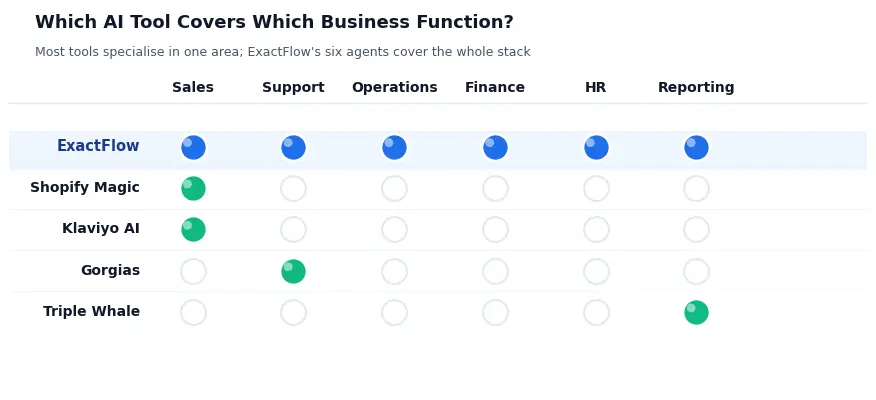
لماذا يهم اختيار البنية البرمجية المناسبة للذكاء الاصطناعي أكثر من أي وقت مضى
تفشل العديد من فرق التجارة الإلكترونية ليس لأنها تفتقر إلى الطموح، بل لأنها لا تعرف كيف تصبح أكثر طموحًا. إنهم لا ينجحون لأن أدواتهم لا تتوافق وتترابط مع بعضها البعض بشكل جيد. أداة تدير البريد الإلكتروني، وأخرى تدعم خدمة العملاء، وثالثة تتبع المخزون، ورابعة تدير الشؤون المالية. على السطح، تبدو هذه خطة جيدة التنظيم. ومع ذلك، غالبًا ما يُترجم ذلك في الواقع إلى فجوات، واستجابات متأخرة، وارتباك وتشتت.
.webp)
لهذا السبب، فإن اختيار أفضل أدوات الذكاء الاصطناعي للتجارة الإلكترونية لا يقتصر فقط على إدخال برامج جديدة؛ بل يتعلق بإنشاء هيكل يمكّن المؤسسة بأكملها. باستخدام الأدوات والروابط الصحيحة، يمكن الوصول إلى المعلومات الصحيحة في مكان واحد متصل، مما يقلل من الوقت المستغرق في التنقل بين لوحات التحكم المختلفة ويمنح مزيدًا من الوقت لنمو المتجر.
وهذا الأمر يكتسب أهمية أكبر عندما تتزايد توقعات العملاء باستمرار. يتوقع الناس الآن الحصول على ردود فورية، وتحديثات التسليم، واقتراحات محسنة للمنتجات، وتجارب شراء سلسة. عندما لا يستجيب المتجر بسرعة، ينتقل العملاء إلى متاجر أخرى. وهنا يأتي دور الذكاء الاصطناعي لسد هذه الفجوة من خلال تبسيط وتحسين الطريقة التي نعمل بها يوميًا.
على سبيل المثال، يمكن لأداة الدعم الحصول على إجابات للأسئلة الشائعة، ويمكن لوكيل المبيعات مساعدتك في توجيه العملاء المحتملين، ويمكن لأداة العمليات تبسيط العمليات الداخلية. وبهذه الطريقة، ستؤدي كل أداة وظيفتها بشكل صحيح، ويصبح العمل أخف وأكثر تنظيمًا. تكمن القوة الحقيقية في الاستفادة من أدوات الذكاء الاصطناعي الذكية للتجارة الإلكترونية بدلاً من الاعتماد الكلي على الجهد البشري والعمل اليدوي.
تعد DigitalOcean موردًا خارجيًا رائعًا لشرح أبسط وأكثر تقنية للنظام القائم على الوكلاء.
كيفية اختيار الأدوات المناسبة
يجب أن توفر أداة الذكاء الاصطناعي الجيدة الوقت لا أن تزيد من استهلاكه. لذلك، من المهم اتخاذ قرارك بحكمة.
ابحث عن هذه الصفات
- سهولة الإعداد.
- حالات استخدام حقيقية للأعمال.
- تكاملات جيدة ومترابطة.
- تقارير واضحة.
- تدفقات عمل مرنة.
- دعم الفرق النامية.
عندما تبدو أداة ما ذكية، ولكنها لا تُستخدم في العمل اليومي الفعلي، فمن المحتمل أنها ليست الحل المناسب.
توفر صفحة من نحن في ExactFlow خلفية قيمة لقيم الشركة الأوسع ونهجها في العمل.
طريقة أكثر ذكاءً لبناء بنيتك البرمجية
أحد الأخطاء التي تقع فيها العديد من فرق المشاريع هو قيامهم بشراء مجموعة من الأدوات دون التفكير في كيفية تكاملها وربطها معًا. هذا الأمر يحول مسار العمل إلى فوضى أكبر مما كانت عليه في البداية.
نهج أفضل
- ابدأ بأكبر مشكلة أو نقطة ألم تواجهها.
- اختر أداة واحدة تحلها بفعالية.
- لا تضف أدوات أخرى إلا عندما تدعم سير العمل بالكامل.
- اجعل الأنظمة بسيطة، سهلة، ومفهومة للاستخدام من قبل الفريق.
هنا تكمن الميزة الحقيقية لأفضل أدوات الذكاء الاصطناعي للتجارة الإلكترونية. يجب أن تعمل معًا لبناء عمل تجاري أكثر كفاءة - وليس عملًا أكثر تعقيدًا.
لتوفير مزيد من السياق حول كيفية تبني الشركات للذكاء الاصطناعي، تقدم McKinsey رؤية مفيدة حول كيفية استخدام الشركات للذكاء الاصطناعي أثناء العمليات التشغيلية.
خاتمة
يمكن للبنية البرمجية المناسبة للذكاء الاصطناعي أن تحول أعمال التجارة الإلكترونية إلى كيان أسرع، وأنظف، ومُدار بشكل جيد. الجزء الأكبر من اللغز هو الاستثمار في الأدوات المناسبة التي ستمكن عمليات عملك. هذا هو السبب في أن أفضل أدوات الذكاء الاصطناعي لشركات التجارة الإلكترونية يجب أن تُقاس دائمًا بفائدتها، وليس بالضجة المثارة حولها.
الجانب المميز في ExactFlow هو أنها لا تركز بشكل ضيق على عملية واحدة محددة. لديها مجموعة متنوعة من الوكلاء الذين يناسبون مجالات متعددة من العمل، مما يجعلها ملائمة تمامًا لمتجر عبر الإنترنت يأمل في البناء على هيكل أكثر تنظيمًا بدلاً من الاعتماد على العمل اليدوي.
من خلال وكلاء الذكاء الاصطناعي، تمكن ExactFlow فرق التجارة الإلكترونية من تقديم المساعدة في المبيعات، والعمليات، والدعم، والتمويل، والموارد البشرية من نظام واحد مترابط. اتصل بنا الآن.
عندما تقوم بإنشاء عمل تجاري أكثر ذكاءً، ابدأ بنقاط الألم التي تبطئ فريقك أكثر من غيرها. يجب أن تجعل الأدوات المناسبة العمل أسهل وليس أكثر صعوبة. هذه هي الطريقة التي تتحول بها أدوات أتمتة التجارة الإلكترونية إلى أدوات حقيقية لتوسيع الأعمال.
الأسئلة الشائعة
1. ما هي أفضل أدوات الذكاء الاصطناعي للتجارة الإلكترونية؟
أفضل الأدوات هي تلك التي تحل مشكلات العمل الحقيقية مثل الدعم، المبيعات، العمليات، المالية، والتسويق دون جعل سير العمل أكثر صعوبة.
2. لماذا يجب على شركات التجارة الإلكترونية استخدام أدوات الذكاء الاصطناعي؟
إنها تساعد المتاجر على توفير الوقت، وتقليل العمل اليدوي، وتحسين تجربة العملاء، واتخاذ قرارات أفضل بشكل أسرع.
3. ما الذي يجعل ExactFlow مختلفة عن الأدوات الأخرى؟
تركز ExactFlow على وكلاء ذكاء اصطناعي متخصصين لفرق التجارة الإلكترونية، بما يشمل المبيعات، الدعم، العمليات، المشتريات، المالية، والموارد البشرية.
4. هل أدوات أتمتة التجارة الإلكترونية مخصصة للشركات الكبيرة فقط؟
لا، يمكن للمتاجر الصغيرة والمتوسطة الحجم الاستفادة منها أيضًا لأن الأتمتة تساعد الفرق على إنجاز المزيد دون إضافة المزيد من العمل اليدوي.
5. كيف أعرف أي أدوات الذكاء الاصطناعي للتجارة الإلكترونية يجب أن أختار؟
ابدأ بأكبر مشكلة تواجهها، ثم اختر الأداة التي تحل هذه المشكلة جيدًا وتتناسب مع سير عملك الحالي.
6. هل يمكنني استخدام أكثر من أداة ذكاء اصطناعي معًا؟
نعم، تدمج العديد من الشركات بين الأدوات، ولكن من المهم التأكد من أنها تعمل معًا بشكل جيد ولا تخلق تعقيدًا إضافيًا.