

10 min czytania
Tradycyjne zarządzanie finansami a finansowi agenci AI
Autor: ExactFlow Team
19 czerwca 2026
Jeśli Twój zespół ds. finansów e-commerce wciąż spędza godziny każdego miesiąca na rozwiązywaniu problemów z wypłatami z platform sprzedażowych i błędami w opłatach, ten wpis pokaże Ci sposób, jak robić to szybciej. Przyjrzymy się, czym tradycyjne procesy księgowe różnią się od nowoczesnych finansowych agentów AI i wyjaśnimy, jak uzyskać kontrolę finansową, na której można polegać, i to niemal w czasie rzeczywistym.
Kiedy liczby spotykają inteligencję
Zarządzanie finansami to ciągła walka o równowagę – dokładność, czas i trafność osądu. Tradycyjna metoda księgowości spełniała swoje zadanie przez lata. Jednak e-commerce wszystko zmienił. Dziś zespoły finansowe muszą jednocześnie obsługiwać transakcje, platformy marketplace, subskrypcje, zwroty, obciążenia zwrotne (chargebacki), koszty wysyłki, wydatki na reklamę i wahania kursów walut. Taka presja sprawia, że w bardzo krótkim czasie staje się jasne, co można osiągnąć pracą ręczną, a czego nie.
W tym miejscu najwyżej oceniani agenci AI dla usług finansowych zaczynają mieć znaczenie. Nie powinni oni zastępować zespołu finansowego. Eliminują oni powtarzalne zadania, które spowalniają zespół. To uwolni czas na lepsze zrozumienie biznesu, zamiast na czyszczenie danych!
Dlaczego tradycyjne zarządzanie finansami wciąż ma znaczenie
Tradycyjne zarządzanie finansami opiera się na ludzkiej wiedzy i doświadczeniu. Księgowi i menedżerowie finansowi znają kontekst, przepisy, wyjątki i zasady zgodności (compliance) znacznie lepiej niż oprogramowanie. Ma to ogromne znaczenie, zwłaszcza w sytuacji, gdy biznes wymaga niezwykle skrupulatnego monitorowania lub występują w nim nietypowe transakcje.
Tradycyjny zespół finansowy doskonale radzi sobie z:
- Sprawdzaniem dokładności liczb.
- Ręcznym księgowaniem nietypowych transakcji.
- Podejmowaniem decyzji opartych na osądzie w skomplikowanych przypadkach.
- Dbaniem o zgodność z przepisami i porządek w zatwierdzeniach.
Jednak w miarę wzrostu wolumenu pojawia się problem. Firmy e-commerce przetwarzają tysiące transakcji na wielu platformach, takich jak Amazon, Shopify i eBay. Tak, ludzki zespół może to ogarnąć, ale tylko kosztem ogromnej ilości czasu poświęcanego na powtarzalne zadania. To tutaj zaczyna tworzyć się przepaść.
W przypadku braku systematycznego procesu operacyjnego, w którym wszystkie aspekty finansowe są wprowadzane ręcznie, zespoły przechodzą w tryb reaktywny. Zamiast rozwiązywać problemy, poświęcają więcej czasu na ich szukanie. W efekcie raporty się opóźniają, prognozy stają się słabsze, a liderzy tracą zaufanie do liczb.
Co zmieniają finansowi agenci AI
Finansowi agenci AI to systemy oprogramowania zdolne do analizowania danych finansowych, podejmowania decyzji na ich podstawie, realizowania tych decyzji, a także do stopniowego samodoskonalenia. Mówiąc najprościej: pomagają w żmudnych aspektach finansów – ale nie zastępują ludzi przy trudnych decyzjach.
Najlepsi agenci finansowi AI są szczególnie pomocni w e-commerce, ponieważ potrafią radzić sobie z szybko zmieniającymi się, nieuporządkowanymi danymi z wielu różnych źródeł. Mogą działać bez przerwy i w tle, bez konieczności czekania na koniec miesiąca w celu uporządkowania dokumentów.
Oto niektóre z przypadków, którymi mogą się zająć:
- Dopasowywanie wypłat do zamówień (uzgadnianie).
- Kategoryzacja wydatków.
- Powiadamianie o nietypowych obciążeniach zwrotnych lub zwrotach.
- Aktualizowanie prognoz przepływów pieniężnych (cash flow).
- Identyfikowanie wycieków marży (margin leaks).
Jest to jeden z głównych powodów, dla których firmy zwracają się ku najwyżej ocenianym agentom AI dla usług finansowych. Mogą oni skrócić czas od momentu, gdy 'coś się stało', do momentu, gdy 'wiemy, co z tym zrobić'.
Jeśli chcesz zobaczyć automatyzację finansową w działaniu dla aplikacji e-commerce, zapoznaj się z Raya AI Financial Agent.
Tradycyjne podejście vs AI: Jasne porównanie
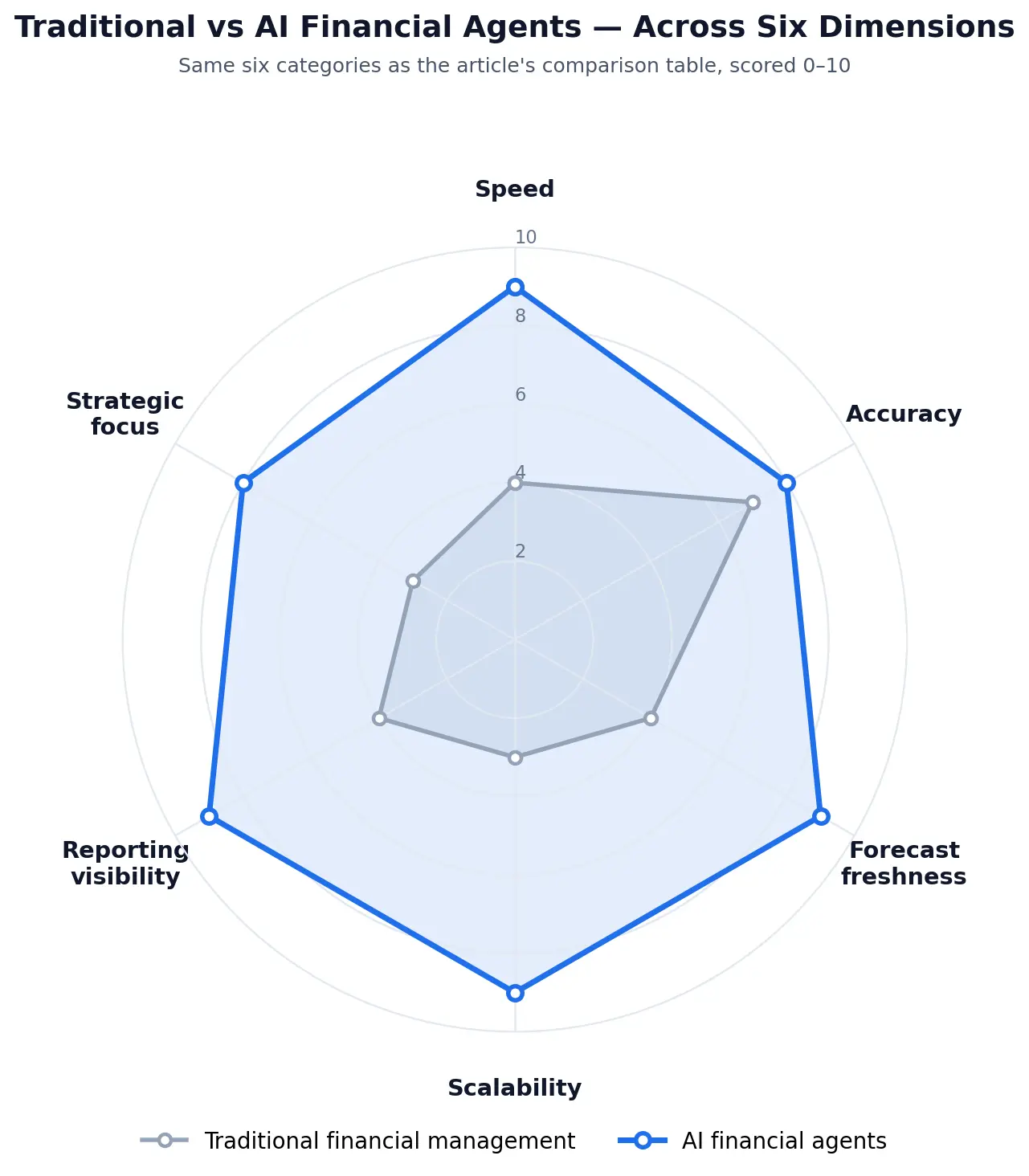
Najlepszym sposobem na wyjaśnienie różnicy jest porównanie sposobu, w jaki każda z metod radzi sobie z codziennymi sprawami w finansach.
| Obszar | Tradycyjne zarządzanie finansami | Finansowi agenci AI |
|---|---|---|
| Szybkość | Wolniejsza, często oparta na partiach danych (batch-based) | Szybka, niemal w czasie rzeczywistym |
| Dokładność | Będzie niezawodna, ale możliwe są błędy ludzkie. | Spójna dzięki wykrywaniu wzorców |
| Prognozowanie | Okresowe i ręczne | Stale aktualizowane |
| Skalowalność | Wymaga więcej pracowników wraz ze wzrostem wolumenu | Zarządza większą ilością danych przy tym samym personelu |
| Widoczność | Raporty są często spóźnione i niekompletne | Wnioski są dostępne znacznie szybciej |
| Wysiłek ludzki | Skupiony głównie na powtarzalnych zadaniach | Nacisk przenosi się na weryfikację i strategię |
Ta tabela przedstawia kilka powodów, dla których wiele marek e-commerce decyduje się na automatyzację. Choć tradycyjne finanse pozostają istotne, są one bardziej efektywne, gdy są wspierane przez narzędzia i systemy AI, a nie tylko przez elementy manualne.
Jak agenci AI pomagają w codziennej pracy finansowej
Siła możliwości agentów AI w usługach finansowych to nie tylko szybkość. To ich zdolność do eliminowania tarć i trudności, z którymi mierzył się zespół zaangażowany w pracę, co wcześniej pochłaniało całe godziny.
1. Uzgadnianie staje się łatwiejsze
Agent AI może automatycznie dopasowywać transakcje, co eliminuje potrzebę ręcznego sprawdzania każdej wypłaty i wydatku, wskazując jedynie te, które stanowią wyjątki.
2. Prognozowanie staje się mądrzejsze
Model arkusza kalkulacyjnego tworzony raz w miesiącu nie będzie w stanie odczytać bieżących trendów tak szybko jak agenci AI. Zapewnia to liderom finansowym bardziej aktualne spojrzenie na przepływy pieniężne.
3. Raportowanie staje się wyraźniejsze
Gdy dane są konsekwentnie kategoryzowane, łatwiej jest uwierzyć w raporty. Jest to ważne, jeśli kierownictwo polega na liczbach przy podejmowaniu decyzji.
4. Wyjątki rzucają się w oczy szybciej
AI potrafi szybko to zidentyfikować i pokazać Ci, jeśli występują nietypowo wysokie zwroty, Twoje opłaty prawdopodobnie będą wyższe lub jeśli wypłata wydaje się nie zgadzać – system AI Cię o tym poinformuje. Pomoże to uniknąć niechcianych niespodzianek w przyszłości.
To właśnie tutaj agenci AI do analizy finansowej mogą mieć realny wpływ. Mogą zaoszczędzić zespołom znacznej ilości ręcznego oczyszczania przy przechodzeniu od surowych danych do wartościowych wniosków.
Jeśli szukasz szerszego kontekstu w zakresie automatyzacji biznesu, McKinsey jest doskonałym źródłem porad na temat tego, jak zespoły finansowe unowocześniają swoje operacje.
Gdzie agenci finansowi AI sprawdzają się najlepiej
Nie wszystkie procesy finansowe można w pełni zautomatyzować. Niektóre wciąż wymagają udziału człowieka, szczególnie w momencie zatwierdzeń, zgodności z przepisami i nietypowych transakcji. Jednak w przypadku powtarzalnych zadań o dużym wolumenie korzyści płynących z AI nie można ignorować.
Oto kilka dobrych przykładów zastosowania:
- Uzgadnianie danych z platform marketplace.
- Kategoryzacja wydatków.
- Analiza marży.
- Prognozowanie gotówki (cash forecasting).
- Śledzenie zwrotów i obciążeń zwrotnych (chargebacków).
Celem nie jest sprawienie, aby finanse stały się niewidoczne. Chodzi o to, aby uczynić pracę w finansach mniej stresującą. Z tego powodu rośnie zainteresowanie znalezieniem najwyżej ocenianych agentów AI dla usług finansowych, których można zintegrować z istniejącymi procesami zespołów bez konieczności całkowitej przebudowy systemu.
Dla firm, które rozważają, jak AI może zostać zintegrowana z ich procesami e-commerce, ExactFlow stanowi dobry punkt wyjścia.
Dlaczego zespoły e-commerce zyskują najwięcej
Nikt nie może zaprzeczyć, że finanse w e-commerce to wyjątkowo skomplikowany obszar. Nie chodzi tu tylko o faktury i listy płac. Chodzi o wiele małych, ruchomych elementów, które bezpośrednio wpływają na marżę.
Nawet sprzedaż, która była dobra, może charakteryzować się niską rentownością ze względu na opłaty za realizację zamówień (fulfillment). Ruch może pojawić się wraz z kampanią, ale przychody mogą nie napływać wystarczająco szybko. Zwrot w wysokości 5 USD na zamówienie może urosnąć do znacznej kwoty, gdy powtórzy się setki razy.
Właśnie dlatego możliwości agentów AI w usługach finansowych są tak ważne w e-commerce. Pomagają one szybko uzyskać wyraźniejszy obraz rzeczywistej sytuacji. Gdy firmy poznają prawdę, mogą podejmować lepsze decyzje dotyczące cen, marketingu oraz zapasów, dzięki czemu mogą się rozwijać.
Strona z cennikiem ExactFlow pozwala zespołom zapoznać się z różnymi poziomami automatyzacji i dowiedzieć się, co byłoby odpowiednie dla ich budżetu i fazy rozwoju.
Jak wdrożyć AI, nie tracąc kontroli
Stopniowe wdrażanie to najlepsze podejście! Zajmij się jednym uciążliwym procesem, zobacz jego wartość i rozwijaj działania na tej podstawie.
Krok 1: Wybierz jeden z procesów
Uzgadnianie finansowe (reconciliation) jest zazwyczaj najlepszym punktem wyjścia, ponieważ najszybciej przyniesie oszczędność czasu.
Krok 2: Łączenie systemów
Połącz dane ze swoich platform sprzedażowych, bankowości i księgowości.
Krok 3: Ustaw zasady weryfikacji
Pozwól AI na wykonywanie powtarzalnych czynności, ale zachowaj udział ludzi przy wrażliwych i wysokobudżetowych działaniach.
Krok 4: Zmierz wpływ
Monitoruj redukcję błędów, szybkość raportowania i zaoszczędzony czas.
Krok 5: Ostrożnie rozszerzaj działania
Gdy pierwszy proces się ustabilizuje, przejdź do prognozowania, analizy wydatków lub obciążeń zwrotnych.
Zakładka O nas zawiera przydatne wyjaśnienie tego, jak ExactFlow podchodzi do operacji e-commerce i procesów finansowych.
Podsumowanie
Wciąż istnieje rola dla tradycyjnego zarządzania finansami, gdzie ważne jest podjęcie decyzji w oparciu o ludzki osąd i przestrzeganie przepisów. Jednak świat e-commerce stworzył środowisko, w którym ręczne procesy finansowe po prostu nie są w stanie dotrzymać kroku biegowi wydarzeń. Dlatego właśnie korzystanie z najwyżej ocenianych agentów AI dla usług finansowych stało się logicznym wyborem dla rozwijających się zespołów.
Prawdziwą korzyścią jest nie tylko automatyzacja. Jest nią klarowność obrazu. Liderzy będą lepiej poinformowani o cenach, wzroście i gotówce, gdy dane finansowe będą czystsze, szybciej dostępne i bardziej wiarygodne. To właśnie powinny robić nowoczesne finanse.
Agenci finansowi AI od ExactFlow automatyzują proces uzgadniania, prognozowania i zabezpieczania marż, pozwalając zespołom e-commerce na szybsze i pewniejsze podejmowanie decyzji. Skontaktuj się z nami już dziś.
Ostateczna odpowiedź nie brzmi "AI zamiast ludzi". Są to inteligentne systemy, które pomagają ludziom w wykonywaniu powtarzalnej pracy. To właśnie ta równowaga zapewnia zespołom finansowym przestrzeń do myślenia, planowania i rozwoju.
DigitalOcean zawiera doskonały techniczny opis tego, czym systemy agentowe różnią się od prostszej automatyzacji.
Frequently Asked Questions
Jakie są główne różnice między tradycyjnym zarządzaniem finansami a finansowymi agentami AI?
Jakie są główne różnice między tradycyjnym zarządzaniem finansami a finansowymi agentami AI?
Tradycyjne zarządzanie finansami opiera się na ręcznej weryfikacji i okresowym raportowaniu, podczas gdy finansowi agenci AI pracują nieprzerwanie, szybciej przetwarzają duże zestawy danych i sygnalizują problemy w czasie rzeczywistym.
Czy finansowi agenci AI są bezpieczni dla danych finansowych?
Czy finansowi agenci AI są bezpieczni dla danych finansowych?
Tak, jeśli zostaną prawidłowo skonfigurowani. Dobre systemy obejmują kontrole dostępu, szyfrowanie i ścieżki audytu (audit trails), dzięki czemu zespoły finansowe mogą zachować stały nadzór.
Jak najlepsi finansowi agenci AI pomagają firmom e-commerce?
Jak najlepsi finansowi agenci AI pomagają firmom e-commerce?
Najlepsi agenci finansowi AI pomagają w uzgadnianiu danych, prognozowaniu, kategoryzacji wydatków i wykrywaniu anomalii, co zmniejsza ilość pracy ręcznej i przyspiesza raportowanie.
Jakie są możliwości agentów AI w usługach finansowych?
Jakie są możliwości agentów AI w usługach finansowych?
Mogą obserwować dane transakcyjne, wykrywać wzorce, automatyzować rutynowe zadania finansowe i zapewniać wsparcie decyzyjne w prognozowaniu, analizie marży oraz obsłudze wyjątków.
Czy agenci AI do analizy finansowej mogą zastąpić zespoły finansowe?
Czy agenci AI do analizy finansowej mogą zastąpić zespoły finansowe?
Nie. Wspierają oni zespoły finansowe, przejmując powtarzalne analizy i czyszczenie danych, ale ludzie są nadal potrzebni do zatwierdzeń, strategii i dbania o zgodność z przepisami.
Jaki jest najlepszy sposób na rozpoczęcie korzystania z najwyżej ocenianych agentów AI dla usług finansowych?
Jaki jest najlepszy sposób na rozpoczęcie korzystania z najwyżej ocenianych agentów AI dla usług finansowych?
Zacznij od jednego prostego procesu, takiego jak uzgadnianie finansowe lub kategoryzacja wydatków, a następnie rozszerzaj działania, gdy zespół dostrzeże mierzalną oszczędność czasu i większą dokładność.