
قراءة في 10 دقائق
الإدارة المالية التقليدية مقابل الوكلاء الماليين المدعومين بالذكاء الاصطناعي
بقلم ExactFlow Team
19 يونيو 2026
إذا كان الفريق المالي لمتجرك الإلكتروني لا يزال يقضي ساعات كل شهر في حل مشكلات مدفوعات المتاجر الإلكترونية والتعامل مع أخطاء الرسوم، فإن هذا المقال سيصحبك في جولة لمعرفة كيفية إنجاز الأمور بشكل أسرع. سنلقي نظرة على الاختلافات بين سير العمل المحاسبي التقليدي والوكلاء الماليين المعاصرين المدعومين بالذكاء الاصطناعي، ونشرح كيفية الحصول على رقابة مالية يمكنك الاعتماد عليها وتحدث في الوقت الفعلي تقريبًا.
عندما تلتقي الأرقام بالذكاء
تعد الإدارة المالية صراعًا مستمرًا لتحقيق التوازن بين الدقة والتوقيت المناسب والقرارات السديدة. لقد أدت الطريقة التقليدية في المحاسبة غرضها لسنوات طويلة، إلا أن التجارة الإلكترونية غيرت كل ذلك. اليوم، يتعين على هذه الفرق المالية التعامل مع المعاملات، المنصات الإلكترونية، الاشتراكات، المرتجعات، عمليات رد المبالغ المدفوعة (Chargebacks)، تكاليف الشحن، الإنفاق الإعلاني، وتقلبات العملات في وقت واحد. هذا الضغط يوضح سريعًا ما يمكن للعمل اليدوي إنجازه وما لا يمكنه فعله.
وهنا تبرز أهمية أفضل وكلاء الذكاء الاصطناعي في الخدمات المالية. لا ينبغي أن يكونوا بديلًا للفريق المالي، بل دورهم هو القضاء على المهام المتكررة التي تبطئ الفريق. سيؤدي هذا إلى تفريغ الوقت لفهم الأعمال بشكل أفضل بدلاً من تنظيف البيانات وتنقيتها!
لماذا لا تزال الإدارة المالية التقليدية مهمة
تعتمد الإدارة المالية التقليدية على الخبرة البشرية؛ حيث يفهم المحاسبون والمديرون الماليون السياق، القواعد، الاستثناءات، والامتثال بشكل أفضل بكثير من أي برنامج. وهذا أمر بالغ الأهمية، لا سيما في حال تطلبت الشركة مراقبة دقيقة للغاية أو كانت لديها معاملات غير اعتيادية.
يتميز الفريق المالي التقليدي في:
- مراجعة الأرقام للتأكد من دقتها.
- إمساك الدفاتر يدويًا للمعاملات غير الاعتيادية.
- اتخاذ قرارات تقديرية في الحالات المعقدة.
- الحفاظ على الامتثال والاعتمادات في نصابها الصحيح.
ومع ذلك، تظهر المشكلة مع زيادة حجم العمل. فالشركات في قطاع التجارة الإلكترونية تعالج آلاف المعاملات عبر منصات متعددة مثل Amazon وShopify وeBay. نعم، يمكن لفريق بشري التعامل مع ذلك، ولكن على حساب قضاء الكثير من الوقت في مهام متكررة؛ وهنا تبدأ الفجوة بالظهور.
في غياب عملية نظامية للتشغيل، وحيث يتم إدخال جميع الجوانب المالية يدويًا، تقع الفرق في وضع 'رد الفعل'. وبدلاً من حل المشكلات، يقضون وقتًا أطول في البحث عنها. نتيجة لذلك، تتأخر التقارير، وتضعف التوقعات، ويفقد القادة الثقة في الأرقام.
ما الذي يغيره الوكلاء الماليون المدعومون بالذكاء الاصطناعي
الوكلاء الماليون المدعومون بالذكاء الاصطناعي هم أنظمة برمجية قادرة على الاطلاع على البيانات المالية، اتخاذ قرارات بشأنها، تنفيذ تلك القرارات، وكذلك تطوير أنفسهم تدريجيًا. ببساطة: إنهم يساعدون في الجوانب المملة والمكررة من التمويل - لكنهم لا يستبدلون البشر في القرارات الصعبة.
يعد أفضل الوكلاء الماليين بالذكاء الاصطناعي مفيدين بشكل خاص في التجارة الإلكترونية لقدرتهم على التعامل مع البيانات سريعة الحركة، غير المنظمة، والمتعددة المصادر. يمكنهم العمل دون توقف وفي الخلفية، دون الحاجة للانتظار حتى نهاية الشهر لتنظيف البيانات.
وفيما يلي بعض الحالات التي يمكنهم التعامل معها:
- مطابقة المدفوعات بالطلبات.
- تصنيف المصروفات.
- الإخطار عن عمليات رد المبالغ أو المرتجعات غير الاعتيادية.
- تحديث توقعات التدفق النقدي.
- تحديد تسربات هامش الربح.
هذا أحد الأسباب الرئيسية التي تجعل الشركات تتوجه نحو وكلاء الذكاء الاصطناعي المرموقين في الخدمات المالية؛ حيث يمكنهم تقليص الوقت المستغرق بين 'حدث شيء ما' و'نحن نعرف ما يجب فعله حيال ذلك'.
إذا كنت ترغب في رؤية الأتمتة المالية في العمل لتطبيقات التجارة الإلكترونية، ألقِ نظرة على Raya AI Financial Agent.
التقليدي مقابل الذكاء الاصطناعي: مقارنة واضحة
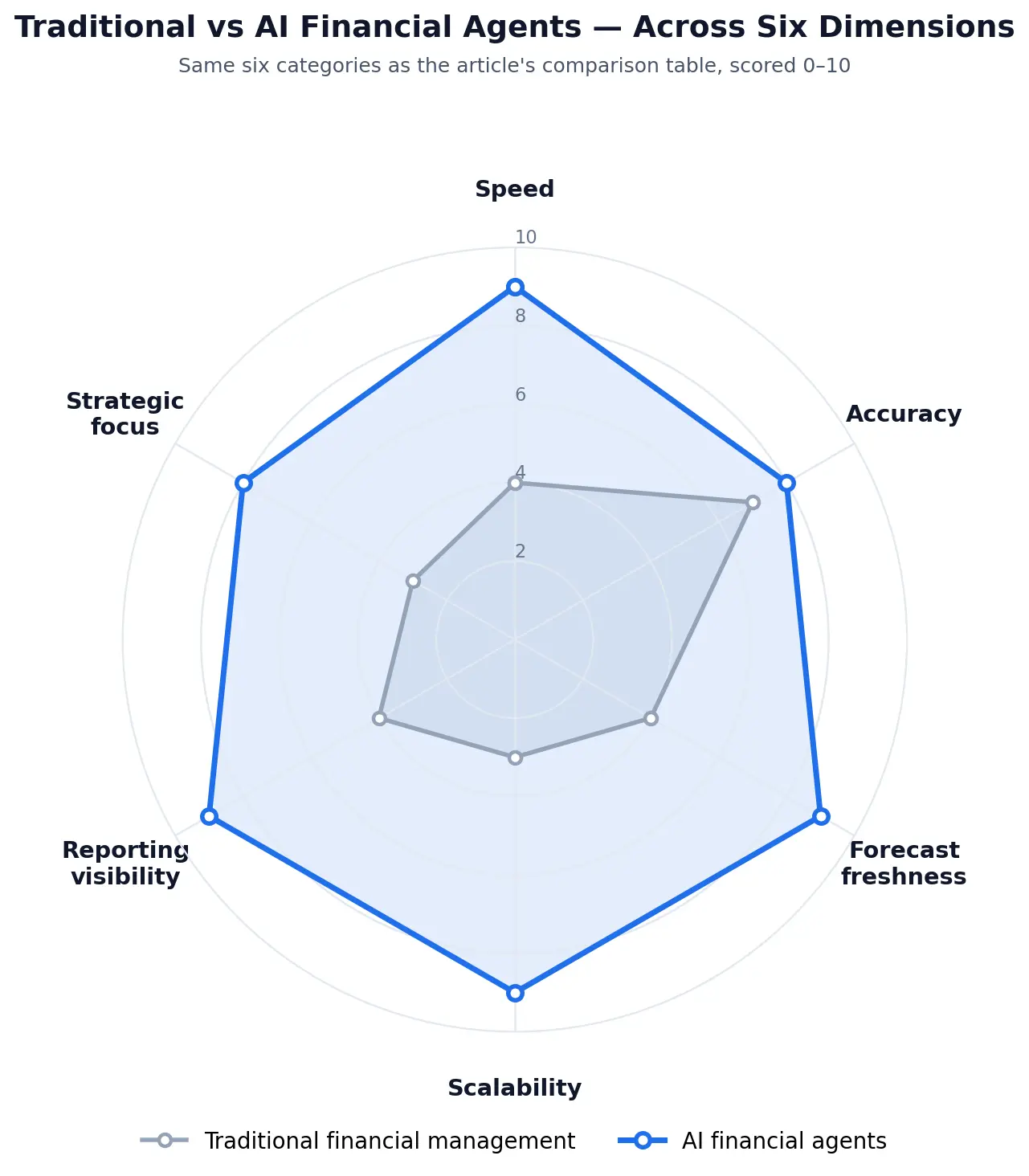
أفضل طريقة لشرح الفرق هي مقارنة الأساليب التي يتعامل بها كل منهما مع الشؤون المالية اليومية.
| المجال | الإدارة المالية التقليدية | الوكلاء الماليون بالذكاء الاصطناعي |
|---|---|---|
| السرعة | أبطأ، وغالبًا ما تعتمد على المعالجة على دفعات (Batch-based) | سريعة، في الوقت الفعلي تقريبًا |
| الدقة | تكون موثوقة، ولكن الأخطاء اليدوية واردة. | متسقة وتعتمد على اكتشاف الأنماط |
| التنبؤ والمستقبل | دوري ويدوي | محدث باستمرار |
| قابلية التوسع | تتطلب المزيد من الموظفين مع زيادة حجم العمل | تدير المزيد من البيانات بنفس حجم الموظفين الحالي |
| الرؤية والوضوح | التقارير غالبًا ما تكون متأخرة وغير مكتملة | الرؤى والتحليلات متاحة بسرعة أكبر |
| الجهد البشري | تركيز كبير على المهام المتكررة | يتحول التركيز إلى المراجعة وبناء الاستراتيجيات |
يوضح هذا الجدول بعض الأسباب التي تدفع العديد من العلامات التجارية في التجارة الإلكترونية نحو الأتمتة. ورغم أن التمويل التقليدي لا يزال وثيق الصلة، إلا أنه يصبح أكثر فاعلية عندما يكون مدعومًا بأدوات وأنظمة الذكاء الاصطناعي بدلاً من العناصر اليدوية البحتة.
كيف يساعد وكلاء الذكاء الاصطناعي في العمل المالي اليومي
قوة قدرات وكلاء الذكاء الاصطناعي في الخدمات المالية لا تكمن فقط في السرعة، بل في قدرتها على تخفيف العبء والضغط عن الفريق، والذي كان يستهلك في السابق ساعات طويلة من العمل المعقد.
1. المطابقة المالية تصبح أسهل
يمكن لوكيل الذكاء الاصطناعي مطابقة المعاملات تلقائيًا، مما يلغي الحاجة إلى مراجعة كل دفعة ومصروف يدويًا، ويقتصر دوره على تحديد الحالات الاستثنائية فقط.
2. التنبؤ المالي يصبح أكثر ذكاءً
نموذج جداول البيانات (Spreadsheet) الذي يتم إنشاؤه مرة واحدة شهريًا لن يكون قادرًا على قراءة الاتجاهات الحالية بالسرعة التي يقوم بها وكلاء الذكاء الاصطناعي. هذا يمنح القادة الماليين رؤية أكثر حداثة للتدفقات النقدية المباشرة.
3. التقارير تصبح أكثر وضوحًا
بمجرد تصنيف البيانات بشكل متسق، يسهل تصديق التقارير والوثوق بها. وهذا أمر مهم للغاية إذا كانت الإدارة تعتمد على الأرقام لتوجيه عملية اتخاذ القرار.
4. الحالات الاستثنائية تظهر بشكل أسرع
يمكن للذكاء الاصطناعي التعرف على ذلك بسرعة؛ فإذا كانت هناك مرتجعات مرتفعة بشكل غير معتاد، أو أن رسومك يرجح أن ترتفع، أو أن مدفوعاتك تبدو غير صحيحة، فسيقوم نظام الذكاء الاصطناعي بإخبارك فورًا. يساعدك هذا على تجنب الأحداث غير المرغوب فيها مستقبلاً.
هذا هو المجال الذي يمكن أن يحدث فيه وكلاء الذكاء الاصطناعي للتحليل المالي تأثيرًا حقيقيًا. يمكنهم توفير كمية هائلة من التنظيف اليدوي للبيانات على الفرق عند الانتقال من البيانات الخام إلى الرؤى القيمة.
إذا كنت تبحث عن سياق أوسع حول أتمتة الأعمال، فإن McKinsey تعد مصدرًا رائعًا للنصائح حول كيفية تحديث الفرق المالية لعملياتها.
أين يناسب الوكلاء الماليون بالذكاء الاصطناعي بشكل أفضل
لا يمكن أتمتة جميع العمليات المالية بالكامل؛ فبعضها لا يزال يتطلب مدخلات بشرية، لا سيما في أوقات الاعتمادات، الامتثال، والمعاملات غير المألوفة. ومع ذلك، بالنسبة للمهام المتكررة ذات الأحجام الكبيرة، لا يمكن تجاهل فوائد الذكاء الاصطناعي.
بعض حالات الاستخدام الجيدة تشمل ما يلي:
- مطابقة حسابات المتاجر الإلكترونية.
- تصنيف المصروفات.
- تحليل هامش الربح.
- التنبؤ النقدي.
- تتبع المرتجعات وعمليات رد المبالغ المدفوعة.
الهدف ليس جعل الإدارة المالية غير مرئية، بل التركيز هنا ينصب على جعلها أقل إرهاقًا وتوترًا. لهذا السبب، هناك اهتمام متزايد بالعثور على أفضل وكلاء الذكاء الاصطناعي للخدمات المالية والذين يمكن دمجهم في سير العمل الحالي للفرق دون الحاجة إلى إصلاح شامل للنظام.
بالنسبة للشركات التي تفكر في كيفية دمج الذكاء الاصطناعي في عمليات التجارة الإلكترونية الخاصة بها، فإن ExactFlow يعد نقطة انطلاق جيدة.
لماذا تستفيد فرق التجارة الإلكترونية بشكل أكبر
لا أحد يمكنه إنكار أن الإدارة المالية للتجارة الإلكترونية هي عمل معقد وفريد من نوعه. الأمر لا يتعلق فقط بالفواتير وكشوف المرتبات، بل يمتد إلى العديد من الأجزاء الصغيرة المتحركة التي تؤثر جميعها على هامش الربح.
حتى المبيعات التي تبدو جيدة قد تكون ذات ربحية منخفضة بسبب رسوم الشحن والتجهيز. قد تأتي حركة الزوار مع حملة إعلانية، لكن الإيرادات قد لا تأتي بالسرعة الكافية. كما أن استرداد 5 دولارات لكل طلب يمكن أن يتراكم ليصبح مبلغًا ضخمًا عند حدوثه مئات المرات.
هذا هو السبب في أن قدرات وكلاء الذكاء الاصطناعي في الخدمات المالية مهمة للغاية في التجارة الإلكترونية؛ حيث يساعدون في الحصول على رؤية أوضح للموقف الفعلي بسرعة. وبمجرد أن تعرف الشركات الحقيقة، يمكنها اتخاذ قرارات أفضل بشأن التسعير، التسويق، والمخزون، ومن ثم تحقيق النمو.
تتيح صفحة أسعار ExactFlow للفرق الاطلاع على المستويات المختلفة للأتمتة ومعرفة ما هو مناسب لميزانيتهم ومرحلة نموهم.
كيفية تبني الذكاء الاصطناعي دون فقدان السيطرة
التطبيق التدريجي هو أفضل نهج! ابدأ بمسار عمل واحد يسبب لك عناءً كبيرًا، واشهد القيمة بنفسك، ثم توسع من هناك.
الخطوة 1: اختر إحدى العمليات
تعد التسوية والمطابقة المالية عادةً أفضل نقطة انطلاق، حيث ستوفر الوقت بشكل أسرع.
الخطوة 2: ربط أنظمتك
اجمع بين بيانات متجرك الإلكتروني، بياناتك المصرفية، وبياناتك المحاسبية.
الخطوة 3: تعيين قواعد المراجعة
اسمح للذكاء الاصطناعي بالقيام بالإجراءات المتكررة، لكن احتفظ بالبشر للإجراءات الحساسة وذات القيمة العالية.
الخطوة 4: قياس الأثر
راقب مدى تقليل الأخطاء، سرعة إعداد التقارير، والوقت الذي تم توفيره.
الخطوة 5: التوسع بحذر
بمجرد استقرار مسار العمل الأول، انتقل إلى التنبؤ المالي، تحليل المصروفات، أو تتبع عمليات رد المبالغ المدفوعة.
توفر صفحة من نحن شرحًا مفيدًا لكيفية تفكير ExactFlow في عمليات التجارة الإلكترونية وسير العمل المالي.
خاتمة
لا يزال هناك دور للإدارة المالية التقليدية، لا سيما عندما يتطلب الأمر اتخاذ قرار بناءً على التقدير الشخصي البشري والامتثال للوائح والقوانين. ومع ذلك، فقد أوجد عالم التجارة الإلكترونية بيئة لا يمكن للعمليات المالية اليدوية مواكبتها ببساطة؛ ولهذا السبب أصبح استخدام وكلاء الذكاء الاصطناعي المرموقين في الخدمات المالية خيارًا منطقيًا للفرق التي تتطلع للتوسع.
ليست الأتمتة وحدها هي الفائدة الحقيقية، بل هو الوضوح. سيكون القادة على دراية وفهم أفضل بالتسعير، النمو، والنقد عندما تكون البيانات المالية أنظف، أسرع، وأكثر موثوقية. هذا هو ما يجب أن يقدمه التمويل الحديث.
يقوم وكلاء الأتمتة الماليون من ExactFlow بأتمتة عمليات المطابقة، التنبؤ، وحماية هوامش الربح، مما يتيح لفرق التجارة الإلكترونية اتخاذ قرارات أسرع وأكثر ثقة. اتصل بنا اليوم.
الإجابة النهائية ليست "الذكاء الاصطناعي بدلاً من البشر"، بل هي أنظمة ذكية تساعد البشر في القيام بالعمل المتكرر. هذا التوازن هو ما يمنح الفرق المالية المساحة للتفكير، التخطيط، والنمو.
تقدم منصة DigitalOcean وصفًا تقنيًا ممتازًا لكيفية اختلاف الأنظمة الوكيلة (Agentic Systems) عن الأتمتة البسيطة.
الأسئلة الشائعة
1. ما هي الاختلافات الرئيسية بين الإدارة المالية التقليدية والوكلاء الماليين بالذكاء الاصطناعي؟
تعتمد الإدارة المالية التقليدية على المراجعة اليدوية والتقارير الدورية، في حين يعمل الوكلاء الماليون بالذكاء الاصطناعي بشكل مستمر، ويعالجون مجموعات البيانات الكبيرة بشكل أسرع، وينبهون إلى المشكلات في الوقت الفعلي.
2. هل الوكلاء الماليون بالذكاء الاصطناعي آمنون للبيانات المالية؟
نعم، إذا تم إعدادهم بشكل صحيح. تتضمن الأنظمة الجيدة عناصر تحكم في الوصول، وتشفيرًا، وسجلات تدقيق حتى تتمكن الفرق المالية من الحفاظ على الإشراف الكامل.
3. كيف يساعد أفضل الوكلاء الماليين بالذكاء الاصطناعي شركات التجارة الإلكترونية؟
يساعد أفضل وكلاء التمويل بالذكاء الاصطناعي في عمليات المطابقة والتسوية، التنبؤ المالي، تصنيف المصروفات، واكتشاف الأنماط غير الاعتيادية، مما يقلل من العمل اليدوي ويسرع إعداد التقارير.
4. ما هي قدرات وكلاء الذكاء الاصطناعي في الخدمات المالية؟
يمكنهم مراقبة بيانات المعاملات، اكتشاف الأنماط، أتمتة المهام المالية الروتينية، وتقديم دعم القرار للتنبؤ المالي، تحليل هوامش الربح، والتعامل مع الحالات الاستثنائية.
5. هل يمكن لوكلاء الذكاء الاصطناعي للتحليل المالي استبدال الفرق المالية؟
لا، بل هم يدعمون الفرق المالية من خلال تولي التحليلات المتكررة وتنظيف البيانات، ولكن لا يزال البشر مطلوبين للاعتمادات، بناء الاستراتيجيات، والامتثال.
6. ما هي أفضل طريقة لبدء استخدام أفضل وكلاء الذكاء الاصطناعي للخدمات المالية؟
ابدأ بمسار عمل بسيط واحد، مثل المطابقة والتسوية أو تصنيف المصروفات، ثم توسع بمجرد أن يلمس الفريق توفيرًا ملحوظًا في الوقت ودقة أفضل في العمل.