

9 min read
How to Motivate Sales Teams: Strategies for Success
Von ExactFlow Team
4. Mai 2026
No script or tech stack will automatically cure your sales team when they are fatigued, distracted, or in a downturn. Figuring out how to motivate a sales team is the distinction between a team that simply does the job and a team that approaches the targets with energy and confidence.
Sales motivation is not just about big bonuses but about having a sense of direction, significant appreciation, and a kind of culture that helps people not only during a boom but also during a downturn.
Why Sales Team Motivation Matters More Than Ever
The modern sales job is a stressful one: constant phone calls, follow-ups, rejections, and changing targets. Strong sales team motivation is not another nice-to-have; it has a straightforward impact on pipeline, win rates, and retention.
When leaders know how to motivate a sales team, they create an environment where individuals feel trusted, encouraged, and challenged in the right direction, so they will be there and work at their highest potential.
1. Align Goals and Behaviors
It is also one of the most relevant sections on how to motivate a sales team to ensure that your goals are aligned with those that you are reinforcing on a day-to-day basis. When you reward closed deals only, reps cannot focus on long-term relationship building or quality discovery calls.
Make goals clear and believable
- Establish individual and team realistic goals.
- Demonstrate to show reps how their daily activities ladder up to those targets.
- Use visual dashboards to make the progress easy to monitor.
Once individuals understand what something good looks like and can view their progress, sales motivation is no longer an abstract concept.
2. Use Sales Incentives the Smart Way
Money is appreciated, but the incentives of great sales are greater than one huge bonus at the end of the year. A smart strategy favours short-term pushes, as well as long-term habits.

Mix short-term and long-term rewards
- Short term: SPIFs, weekly competitions, or incentives on booked demos.
- Long-term: promotions and development opportunities, along with tiered bonuses.
To really learn how to motivate a sales team, you must have the incentives that correspond to the behavior you want, like quality conversations, right forecasting, and teamwork, but not who got the easy sale. See our About Us for more details.
3. Make daily sales motivation a habit.
Motivation is not a light bulb that you switch on once a quarter but rather something you provide and strengthen daily. Daily sales motivation brings the working energy consistently, especially in such times when the market is tough or when the deals are slow.
Practical daily habits
- Start the day with a quick huddle: priorities, wins, and day focus.
- Give a brief description of how persistence is rewarded.
- Give shout-outs at the end of the week based on effort and performance.
Leaders who know these rhythms understand how to motivate a sales team in good months and bad months.
4. Give Useful Feedback and Real Coaching
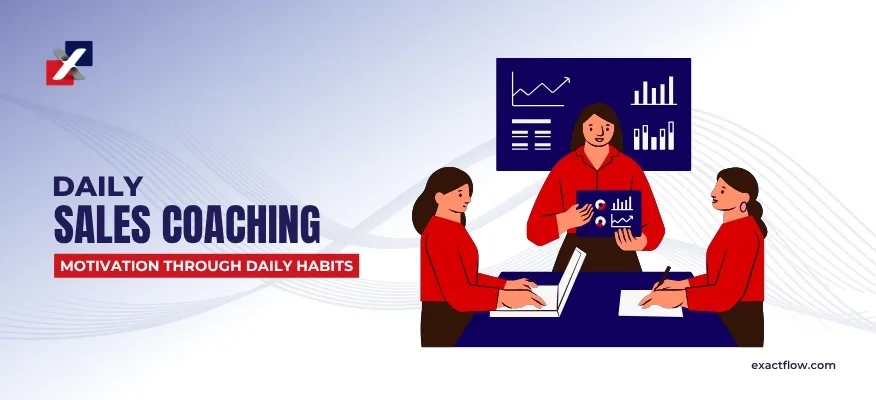
Most reps claim that they would like more feedback, but only when it will actually help them to grow. One of the foundational elements of sales team motivation is the sense that your manager is investing in you and not merely reviewing your numbers.
Turn feedback into fuel
- Be specific: explain the behaviours, not the personalities.
- Point out the positive and negative things to do better.
- Associate feedback with opportunities: "Here is what to do on your next call."
When feedback is frequent, actionable, and fair, it turns out to be a strong motivation for sales, instead of something feared by the reps.
5. Build a Culture of Recognition (Not Just Pressure)
Sales is an inherently competitive environment, and a culture that is solely based on pressure drains people. There is a healthier perspective on motivating a sales team, which is a mixture of accountability and real recognition.
Recognise more than just the top 1%
- Be happy with minor achievements: made the initial booking, had a great discovery call, and had a creative follow-up.
- Switch recognition to make new and mid-performers visible.
- Allow peers to nominate each other for helpfulness or teamwork.
Sometimes, even public praise, a few words, or a shout-out during a meeting is more than a bonus to motivate sales.
6. Improve Sales Team Management One Conversation at a Time
Strong sales team management does not involve fancy dashboards but regular, more human conversations. Reps demand clarity, support and a listening manager.
Sales team management tip: lead with curiosity
- Ask, "What's blocking you?" rather than, "Why is it not hitting quota?"
- Reviews of a work pipeline should be a coaching session, not an interrogation.
- Engage reps in problem-solving as opposed to assigning them decisions.
Managers who feel human and likeable tend to know how to motivate a sales team more effectively than those who use only pressure.
7. Support the Whole Person, Not Just the Number
Each target has one person with a life, strengths and stressors behind it. Sales team motivation that is done over a long period of time is achieved when individuals feel safe and supported psychologically.

Create space for real talk
- Track workload and wellbeing, and not only measures.
- Give flexibility where necessary in difficult personal times.
- Promote breaks and relaxation, particularly after intense efforts.
The motivation for sales will be more intrinsic when reps realise that the leadership is interested in them as humans, they want to win, not just avoid being blamed.
Conclusion
When you ask yourself how to motivate a sales team in a manner that will definitely last, you must first redirect your thinking beyond one-off bonuses to the day-to-day environment. Transparency, incentives that are warranted, real coaching, and regular acknowledgements all come together into a culture whereby reps feel free to work harder, learn quicker, and stay longer.
Learning to motivate a sales team involves balancing your objectives, behaviours, and rewards so that the correct actions become instinctive, supported by leaders who communicate effectively, who celebrate frequently, and who are open-minded when times get tough.
ExactFlow assists the revenue teams in creating repeatable sales processes and coaching rhythms to enable the managers to spend less time chasing the data and more time keeping their salespeople motivated and high performing.
As soon as you approach motivating a sales team as a sustained process rather than a short-term solution, you build a sales organisation that can survive in slack periods, adapt to change and still show up with energy every day.
Frequently Asked Questions
Why is it important to learn how to motivate a sales team?
Why is it important to learn how to motivate a sales team?
Motivating a sales team is crucial because motivation significantly impacts activity levels, pipeline quality, win rates, and employee retention. A motivated team handles rejection better, learns faster, and delivers more consistent results.
What are some effective sales incentives?
What are some effective sales incentives?
Effective sales incentives mix short-term and long-term rewards, such as SPIFs, contests, tiered bonuses, career development opportunities, and public recognition. The key to sales motivation is aligning incentives with behaviours that support sustainable growth.
How can managers provide daily sales motivation without burning people out?
How can managers provide daily sales motivation without burning people out?
Managers can provide daily sales motivation through quick huddles, celebrating small wins, sharing success stories, and checking in on both performance and well-being. These simple habits are a practical way to live out and motivate a sales team every day.
What is one powerful sales team management tip to improve motivation?
What is one powerful sales team management tip to improve motivation?
A powerful sales team management tip is to turn pipeline reviews into coaching sessions: focus on helping reps think through deals, remove obstacles, and improve their skills. When reps feel supported, their sales team motivation naturally increases.