
12 min di lettura
Come automatizzare la gestione degli ordini con l'IA
Di ExactFlow Team
25 maggio 2026
Con la crescita dei negozi online, la gestione dei ordini sta diventando rapidamente uno degli aspetti più complessi nella gestione di un'attività. Quello che sembra un processo semplice può trasformarsi in un incubo quotidiano fatto di importazione degli ordini, modifiche inventariali, verifiche sulle spedizioni, rimborsi ed e-mail dei clienti. Per questo motivo, sempre più marchi si affidano alla gestione degli ordini e-commerce per eliminare il lavoro manuale e garantire che tutte le operazioni si svolgano in modo efficiente.
È l'intelligenza artificiale a cambiare le regole del gioco, trasformando i compiti ripetitivi in processi intelligenti e automatizzati che operano silenziosamente in background. Il vostro team può risolvere i problemi di routine in poche ore, concentrandosi pienamente sui clienti, sulla strategia e sulla crescita.
Cos'è la gestione degli ordini e-commerce?
Fondamentalmente, la gestione degli ordini e-commerce è il processo di ricezione, tracciamento, evasione e aggiornamento degli ordini dei clienti attraverso i vostri vari canali di vendita. Comprende ogni aspetto del flusso che inizia quando un utente clicca su "acquista" e termina quando il pacco viene ricevuto e accettato.
Un sistema di gestione degli ordini (OMS) per i brand di e-commerce non dovrebbe limitarsi ad archiviare i dati degli ordini; deve fare di più. Deve unificare vendite, inventario, spedizioni e comunicazione con i clienti in un unico posto per aiutare la vostra azienda a muoversi più velocemente e a ridurre al minimo gli errori.
Quando l'IA entra a far parte di questo ecosistema, il processo diventa ancora più intelligente. Il sistema può identificare modelli ricorsivi, instradare automaticamente i compiti e segnalare i problemi prima che abbiano un impatto sul cliente finale.
Per ottenere una comprensione più ampia dei concetti fondamentali del flusso degli ordini, è utile esaminare come Shopify descrive l'elaborazione degli ordini nel settore dell'e-commerce.
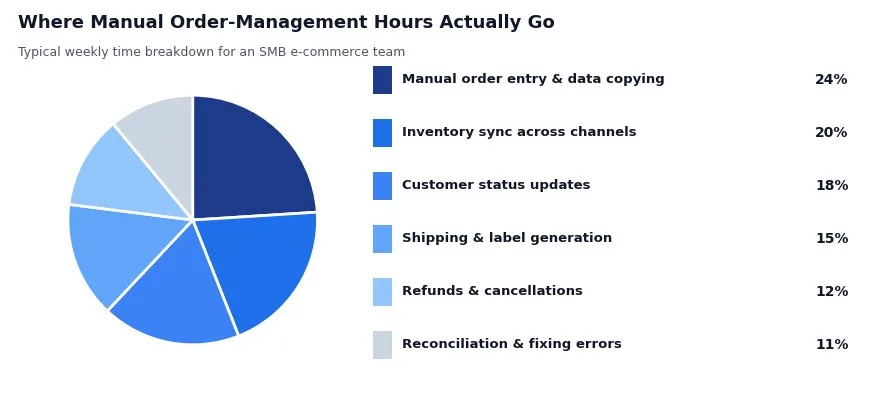
Perché la gestione manuale degli ordini rallenta il vostro business
Molte aziende gestiscono ancora gli ordini utilizzando fogli di calcolo, e-mail e strumenti isolati. Questo approccio può funzionare su piccolissima scala, ma crolla non appena le vendite iniziano ad aumentare.
Problemi comuni legati al lavoro manuale:
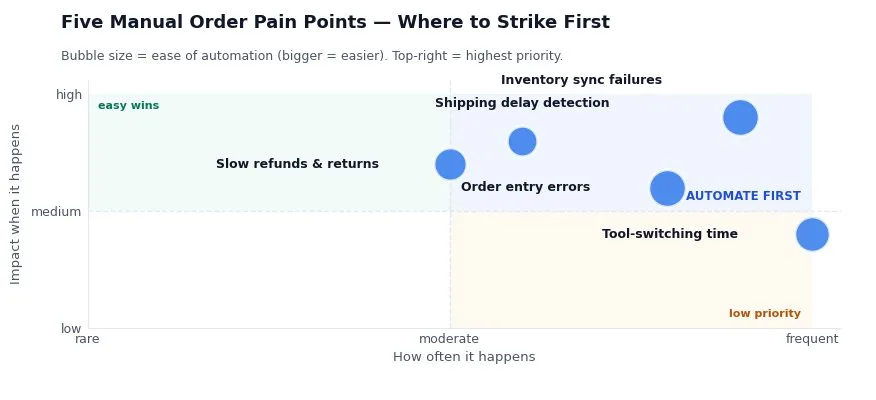
- Gli ordini vengono trascritti o copiati in modo errato.
- L'inventario non tiene il passo con le vendite reali.
- I ritardi nelle spedizioni vengono notati solo quando il cliente si lamenta.
- I processi di rimborso e cancellazione richiedono troppo tempo.
- Invece di risolvere i problemi in modo strategico, i team perdono tempo a passare da uno strumento all'altro.
Questi problemi dimostrano esattamente perché un sistema di gestione degli ordini e-commerce sia così importante. Il sistema giusto riduce gli attriti in ogni fase e mantiene sincronizzate tutte le parti mobili.
Come l'IA automatizza la gestione degli ordini
L'IA non si limita a informatizzare il processo, ma lo migliora attivamente. Un sistema efficace di gestione degli ordini e-commerce sfrutta l'IA per monitorare i cambiamenti, reagire agli eventi e agire con un intervento umano minimo o nullo.
1. Instradamento automatico degli ordini
Non appena viene ricevuto un nuovo ordine, l'IA può instradarlo in modo ottimale in base alla posizione dello stock, alla velocità di spedizione, alla posizione geografica del cliente o ai costi. Ciò si traduce in un'evasione più rapida e in un minor numero di errori.
2. Sincronizzazione dell'inventario in tempo real
L'IA può aggiornare l'inventario su tutti i canali istantaneamente dopo una vendita. Questo previene il rischio di sovravendita, la carenza di stock e l'imbarazzante momento in cui si deve comunicare a un cliente che il prodotto è esaurito dopo che ha già pagato.
3. Gestione intelligente delle eccezioni
Se accade qualcosa di insolito, come un ordine sospetto, un livello di stock critico o una consegna non riuscita, l'IA può attivare immediatamente un avviso. In questo modo il vostro team ha il tempo di intervenire proprio dove è richiesto il giudizio umano.
Questa è la vera forza della gestione degli ordini e-commerce: non solo automazione per essere più veloci, ma un'automazione che riduce gli errori e massimizza la soddisfazione del cliente. Verificate qui i dettagli dei nostri Prezzi.
Vantaggi di un sistema di gestione degli ordini automatizzato
Elaborazione più rapida
Un sistema automatizzato di gestione degli ordini per le aziende di e-commerce può elaborare gli ordini in modo quasi istantaneo. Questo accelera l'intero processo, dal checkout alla spedizione, migliorando sensibilmente l'esperienza del cliente.
Meno errori
L'inserimento manuale dei dati apre la porta all'errore umano. L'automazione riduce al minimo questi rischi garantendo che i dati degli ordini, le informazioni sui clienti e i dettagli di spedizione siano sincronizzati su tutti i sistemi.
Migliore comunicazione con il cliente
Grazie a un tracciamento accurato degli ordini, i clienti ricevono aggiornamenti corretti senza dover attendere la risposta del supporto. Questo riduce drasticamente le richieste del tipo "Dov'è il mio ordine?" e aumenta la fiducia nel vostro marchio.
Scalabilità semplificata
Le operazioni manuali non possono essere gestite quando il volume degli ordini aumenta. Un solido sistema di gestione degli ordini e-commerce vi offre la struttura necessaria per crescere senza dover assumere personale all'infinito.
Per i brand che desiderano automatizzare l'intero ecosistema e-commerce, Google Cloud offre ottimi contenuti sulle operazioni commerciali basate sull'intelligenza artificiale.
Cosa cercare in un sistema di gestione degli ordini e-commerce
Non tutte le piattaforme sono progettate allo stesso modo. Quando scegliete un sistema di gestione degli ordini e-commerce, cercate funzionalità che supportino una crescita reale sul campo.
Funzionalità chiave da dare la priorità
- Sincronizzazione degli ordini multicanale (Multi-Channel).
- Aggiornamenti dell'inventario in tempo reale.
- Regole di evasione automatizzate (Fulfillment Rules).
- Integrazione di spedizioni e logistica.
- Flussi di lavoro per le notifiche ai clienti.
- Reportistica e avvisi di eccezione.
I migliori strumenti dovrebbero semplificare le operazioni, non complicarle. Se una piattaforma è difficile da gestire, l'automazione perde il suo scopo. Per maggiori dettagli, visitate la nostra pagina Chi siamo.
Tabella 1 · Sistema di gestione degli ordini - Lista di controllo per l'acquirente
| Funzionalità | Cosa fa concretamente | Perché è importante | CAMPANELLO D'ALLARME Cosa monitorare |
|---|---|---|---|
| Sincronizzazione ordini multicanale | Raccoglie gli ordini da ogni vetrina online, marketplace e canale social in un unico sistema centralizzato | Basta con le unioni settimanali di file CSV; nessun ordine andrà smarrito | La dicitura "Disponibile a breve per il marketplace X" significa che dovrete continuare a copiare e incollare manualmente per quel canale |
| Sincronizzazione inventario in tempo reale | Aggiorna lo stock ovunque entro pochi secondi da ogni vendita, reso o trasferimento | Previene la sovravendita e l'imbarazzante e-mail di scuse con scritto "prodotto esaurito" | "Sincronizzazione ogni 15 minuti" non significa tempo reale: rischiate di vendere due volte lo stesso articolo in quell'intervallo |
| Regole di evasione automatizzate | Inoltra ogni ordine al magazzino o al partner logistico (3PL) corretto in base a regione, stock o livello di servizio | Spedizione più economica, consegna più rapida, nessuna selezione manuale | "Solo regole fisse e rigide": diventeranno obsolete per le vostre esigenze nel giro di un trimestre |
| Integrazione di spedizioni e logistica | Genera etichette di spedizione, trasmette il codice di tracciamento e aggiorna lo stato della consegna nel record dell'ordine | Nessuna stampa manuale, nessuna creazione di etichette a mano, nessuna perdita di tempo a chiedere nel team "è già stato spedito?" | Supporto limitato a soli due corrieri: sarete vincolati esclusivamente alle loro tariffe |
| Flussi di notifica al cliente | Invia aggiornamenti automatici su ordini, spedizioni e ritardi tramite e-mail e SMS | Drastica riduzione dei ticket di assistenza legati al tracciamento e aumento della fiducia dei clienti | Solo modelli rigidi senza condizioni personalizzabili: i messaggi risulteranno freddi, generici e robotici |
| Reportistica e avvisi di eccezione | Evidenzia ordini bloccati, anomalie e violazioni dei tempi di consegna (SLA) prima che il cliente se ne accorga | Il vostro team interviene solo sui casi che richiedono effettivamente un giudizio umano | "Riepilogo via e-mail una volta al giorno": questo non è un sistema di avviso in tempo reale, è solo una newsletter informativa |
Dovreste anche assicurarvi che il vostro sistema si integri con gli altri strumenti del vostro stack tecnologico, come software di spedizione, CRM e strumenti di analisi. È proprio in questo modo che una piattaforma connessa di gestione degli ordini e-commerce può diventare il cuore pulsante delle vostre operazioni.
Quando si confrontano le piattaforme di automazione, è utile studiare come Zapier spiega l'automazione dei flussi di lavoro tra diverse applicazioni.
Come iniziare
Non è necessario automatizzare tutto in una volta. L'approccio più intelligente consiste nell'iniziare con le attività più ripetitive e faticose.
Passo 1: Mappate il vostro processo attuale
Mettete per iscritto come si muove un ordine all'interno del vostro sistema oggi. Annotate dove si verificano ritardi, errori e controlli manuali.
Passo 2: Identificate le opportunità di automazione
Cercate attività come:
- Importazione degli ordini
- Aggiornamenti sulle spedizioni
- Sincronizzazione dell'inventario
- Attivatori per i rimborsi
- Notifiche ai clienti
Queste sono di solito le aree più semplici in cui introdurre l'intelligenza artificiale.
Passo 3: Create e testate i vostri flussi di lavoro
Iniziate in piccolo. Automatizzate un singolo processo, verificate i risultati e poi espandete il sistema passo dopo passo. In questo modo migliorerete le operazioni senza sovraccaricare il vostro team.
La gestione degli ordini è solo un pezzo del puzzle più ampio dell'automazione. Se volete scoprire come l'IA sta aiutando i brand di e-commerce a ottimizzare il fulfillment, l'inventario, i flussi di lavoro dei clienti e la gestione quotidiana, date un'occhiata alla nostra guida completa all'automazione e-commerce basata sull'IA nel 2026.
Conclusione
L'IA sta ridisegnando le operazioni dei negozi online rendendo la gestione degli ordini e-commerce più rapida, priva di errori e decisamente meno stressante. Invece di reagire ai problemi uno alla volta, le aziende possono costruire sistemi automatizzati che gestiscono il lavoro di routine in background, lasciando che i team si concentrino sulla crescita.
Una strategia intelligente di gestione degli ordini e-commerce vi aiuta a ridurre gli errori manuali, ad aumentare la velocità di evasione e a offrire ai clienti un'esperienza migliore in ogni singola fase.
ExactFlow aiuta i marchi di e-commerce ad automatizzare i flussi di lavoro degli ordini, connettere i sistemi e mantenere le operazioni fluide con meno lavoro manuale. Contattateci ora.
Il vero vantaggio dell'automazione non risiede solo nel risparmio di tempo; si tratta di costruire un'azienda capace di scalare con sicurezza. Quando i vostri processi si basano su una gestione degli ordini e-commerce affidabile, ottenete più controllo, migliore visibilità e una base decisamente più solida per la crescita futura.
FAQ (Domande frequenti)
1. Cos'è la gestione degli ordini e-commerce?
La gestione degli ordini e-commerce è il processo di tracciamento, evasione e aggiornamento degli ordini dei clienti attraverso i vostri canali di vendita. Collega la creazione dell'ordine, l'inventario, la spedizione e la comunicazione con il cliente in un unico flusso di lavoro organizzato.
2. In che modo un sistema di gestione degli ordini utilizzato dai brand di e-commerce migliora l'efficienza?
Un sistema di gestione degli ordini per le aziende di e-commerce aumenta l'efficienza automatizzando attività ripetitive come l'instradamento degli ordini, gli aggiornamenti dello stock e le notifiche di spedizione. Ciò riduce il lavoro manuale e aiuta i team a gestire più ordini con meno errori.
3. Cosa dovrei aspettarmi da un sistema di gestione degli ordini per l'e-commerce?
Un buon sistema di gestione degli ordini e-commerce dovrebbe essere in grado di gestire ordini multicanale, sincronizzare l'inventario in tempo reale, supportare l'automazione del fulfillment e fornire report chiari per agire tempestivamente in caso di problemi.
4. Perché un sistema di gestione degli ordini e-commerce è importante per la scalabilità?
Un sistema di gestione degli ordini e-commerce è fondamentale per la scalabilità perché offre alla vostra azienda una struttura ripetibile per gestire volumi di ordini più elevati senza un aumento massiccio del carico di lavoro manuale. Vi consente di crescere mantenendo le operazioni efficienti e orientate al cliente.