
12 min czytania
Od wsparcia do sprzedaży: jak AI poprawia doświadczenie klienta w e-commerce
Autor: ExactFlow Team
20 maja 2026
W dzisiejszych czasach klienci nie porównują już tylko cen, ale przede wszystkim doświadczenia. Oczekują szybkich odpowiedzi, bezproblemowego procesu płatności i ofert, które naprawdę odpowiadają ich potrzebom. Dlatego marki, które odniosą sukces w 2026 roku, to te, które uznają doświadczenie klienta w e-commerce za główny motor swojego wzrostu, a nicht za zwykły dodatek.
Cichym motorem tej zmiany jest sztuczna inteligencja, która łączy wsparcie, marketing i sprzedaż w jedno spójne doświadczenie, dbając o to, by każda interakcja była bardziej pomocna i wymagała mniej wysiłku ze strony użytkownika.
Czym jest doświadczenie klienta w e-commerce w 2026 roku?
Mówiąc najprościej, doświadczenie klienta (CX) w e-commerce to suma wszystkich interakcji, jakie kupujący podejmuje z Twoją marką w sieci: od pierwszej reklamy, przez szybkość ładowania strony, łatwość nawigacji, płynność rozwiązywania problemów, aż po kontakt po zakupie.
AI nie eliminuje ludzkiego podejścia, ale je potęguje. Potrafi zapamiętać preferencje klientów, przewidzieć ich potrzeby i reagować w czasie rzeczywistym, nawet gdy z Twojej strony korzystają tysiące użytkowników jednocześnie.
Aby zyskać szerszą perspektywę na budowanie przewagi konkurencyjnej poprzez doświadczenia, warto przyjrzeć się, jak firma McKinsey analizuje ścieżki zakupowe klientów w cyfrowym handlu.
Jak AI przekształca obsługę klienta w motor generujący zyski

Dawniej obsługę klienta traktowano jako centrum kosztów – skrzynkę odbiorczą, którą starano się utrzymać jak najmniejszą. Dziś AI odwraca to myślenie, bezpośrednio łącząc sprzedaż ze wsparciem.
Natychmiastowe odpowiedzi 24/7
W zaledwie kilka sekund chatboty i wirtualni asystenci AI rozwiązują rutynowe zgłoszenia: terminy wysyłki, procedury zwrotów, stan konta czy status zamówienia. Zmniejsza to tarcie i niepewność w kluczowych momentach zakupowych, co stanowi fundament poprawy doświadczeń klienta w e-commerce.
Klienci znacznie chętniej zostają na stronie, przeglądają ofertę i kupują, gdy natychmiast uzyskują jasne informacje.
Inteligentne i płynne przekazywanie spraw ludziom
AI wie również, kiedy ustąpić miejsca człowiekowi. W skomplikowanych lub delikatnych sprawach potrafi przekazać rozmowę konsultantowi wraz z pełnym kontekstem. Połączenie szybkości maszyn i empatii człowieka to miks, który buduje najlepsze wspomnienia związane z Twoją marką.
Tabela 1 · Od wsparcia do sprzedaży — jak AI przekształca każdy punkt styku z klientem w moment generowania przychodów
| Punkt styku z klientem | Tradycyjna reakcja | Reakcja zoptymalizowana przez AI | Odblokowany wynik sprzedaży |
|---|---|---|---|
| Pytanie o produkt przed zakupem | Klient czeka godzinami na odpowiedź, często tracąc zainteresowanie | Chatbot odpowiada natychmiast i sugeruje kompatybilne produkty | Wyższy współczynnik dodawania do koszyka przez dobrze poinformowanych klientów |
| Niepewność co do rozmiaru lub dopasowania | E-mail lub oczekiwanie na konsultanta; koszyk jest często porzucany podczas czekania | Asystent rozmiaru AI analizuje poprzednie zakupy i wymiary ciała, dając trafną rekomendację | Mniej zwrotów i wyższa konwersja na etapie finalizacji zamówienia |
| Zapytanie o status przesyłki | Zgłoszenie typu „gdzie moja paczka?” czeka w kolejce do supportu | Proaktywna aktualizacja, zanim klient zapyta, połączona z zaproszeniem do ponownego zakupu | Kolejny zakup napędzany momentem zbudowania zaufania |
| Chęć dokonania zwrotu | Przetworzenie zwrotu pieniędzy, utrata przychodu i zamknięcie tematu | Zaproponowanie alternatywnego rozmiaru, koloru lub produktu przed zatwierdzeniem zwrotu | Ocalona sprzedaż i ochrona wartości życiowej klienta (LTV) |
| Skarga lub problem techniczny | Standardowe przeprosiny oraz zwrot kosztów lub kod rabatowy | Inteligentne przekierowanie do człowieka wraz z pełną historią i kontekstem | Utrzymanie klienta, który podzieli się pozytywną opinią o rozwiązaniu problemu |
| Cisza po zakupie | Brak kontaktu aż do wysyłki masowego newslettera w kolejnym miesiącu | Spersonalizowane porady dotyczące pielęgnacji produktu, a następnie przypomnienie o uzupełnieniu zapasów we właściwym czasie | Powtarzające się przychody napędzane lojalnością |
Personalizacja: AI jako wirtualny doradca w Twoim sklepie
W sklepie stacjonarnym świetny sprzedawca słucha, doradza i prowadzi klienta. W sieci AI pełni tę samą rolę, ale na masową skalę.
Dopasowane odkrywanie produktów
AI analizuje historię przeglądania, kliknięcia i zakupy, aby rekomendować produkty w czasie rzeczywistym. Potrafi:
- Wyświetlać najbardziej trafne produkty na stronie głównej i stronach kategorii.
- Rekomendować produkty komplementarne bezpośrednio w koszyku zakupowym.
- Oferować spersonalizowane treści i rabaty na podstawie zachowania użytkownika.
To jeden z najskuteczniejszych sposobów na poprawę doświadczeń klienta w e-commerce – ułatwienie im znalezienia tego, czego naprawdę szukają, bez konieczności ciągłego przewijania strony.
Aby zrozumieć, jak globalne platformy podchodzą do tej zmiany, warto sprawdzić, jak firma Adobe definiuje personalizację opartą na AI w handlu.
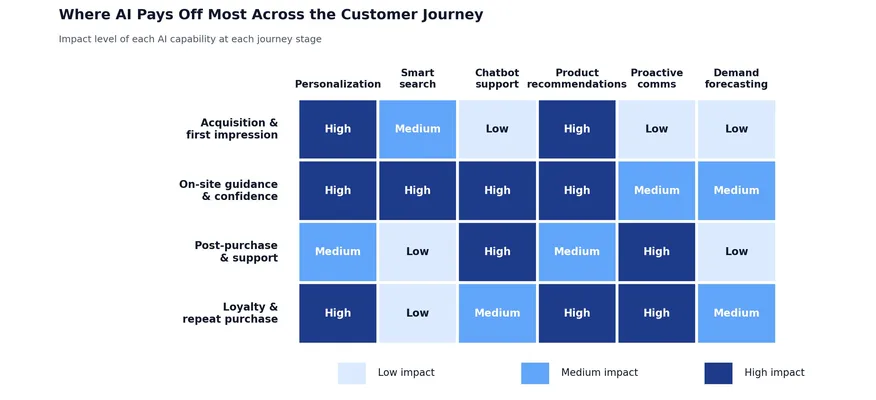
AI na każdym etapie ścieżki klienta: Od pierwszej wizyty do kolejnego zakupu
1. Przyciąganie i pierwsze wrażenie
AI pomaga dostarczyć właściwy komunikat do odpowiedniej osoby we właściwym czasie – za pomocą reklam, e-maili i spersonalizowanych elementów na stronie. Płynna pierwsza wizyta buduje pozytywne nastawienie do całego procesu zakupowego.
2. Nawigacja i budowanie zaufania na stronie
Bariery znikają dzięki wyszukiwarkom, które rozumieją język naturalny, korzystają z inteligentnych filtrów i oferują rekomendacje wspierane przez AI. Co więcej, opinie, sekcje Q&A oraz dobór rozmiaru oparte na sztucznej inteligencji dają kupującym pewność potrzebną do kliknięcia przycisku „Kup teraz”.
3. Satysfakcja i wsparcie po zakupie
AI dba o zaangażowanie klientów poprzez proaktywne powiadomienia, inteligentne przekierowywanie zgłoszeń i opcje samoobsługowe. To kluczowy krok, jeśli poważnie myślisz o poprawie doświadczeń klienta, ponieważ to na tym etapie zaufanie zostaje utrwalone lub bezpowrotnie utracone.
4. Lojalność i kolejne zakupy
Identyfikując trendy w zamówieniach i zachowaniach, AI potrafi podpowiedzieć, kiedy i jak ponownie zaangażować klientów – czy to za pomocą trafnych sugestii, przypomnień o odnowieniu zapasów, czy ekskluzywnych benefitów lojalnościowych.
Za kulisami: AI a doskonałość operacyjna
Świetne doświadczenia widoczne na pierwszy rzut oka zależą od sprawnych operacji na zapleczu biznesu.
AI pomaga w:
- Prognozowaniu popytu i unikaniu braków magazynowych.
- Wczesnym wykrywaniu problemów z kurierami lub dostawami w danych regionach.
- Priorytetyzacji segmentów klientów, na których warto się skupić w następnej kolejności.
Gdy zamówienia docierają na czas, zwroty są proste, a komunikacja przejrzysta, doświadczenie klienta staje się całkowicie bezproblemowe – mimo że w tle działa zaawansowana automatyzacja.
Aby dowiedzieć się więcej o roli sztucznej inteligencji w operacjach biznesowych, możesz przeczytać, jak Google Cloud wyjaśnia zastosowanie AI w operacjach handlu detalicznego i e-commerce.
Jak poprawić doświadczenie klienta w e-commerce za pomocą AI (Praktyczne kroki)
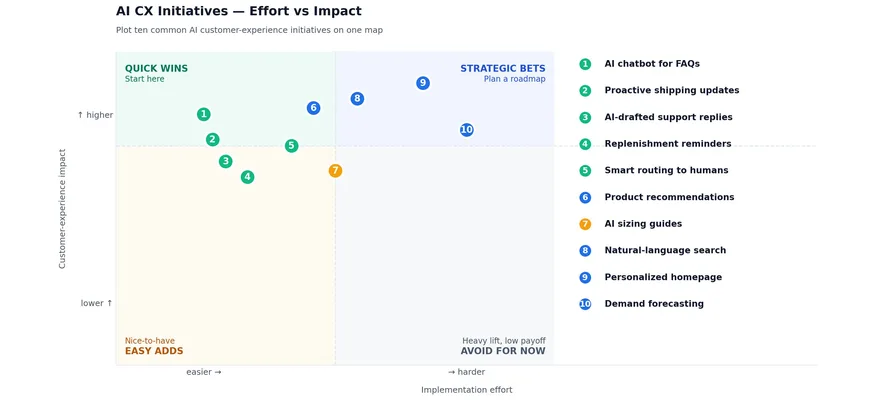
Nie potrzebujesz ogromnego zespołu ani gigantycznego budżetu, aby zacząć. Skup się na kilku obszarach o dużym wpływie:
1. Przebuduj punkty styku w obsłudze klienta
- Dodaj czat oparty na AI do swojej strony, aby odpowiadać na najczęstsze pytania.
- Użyj AI do tworzenia wersji roboczych odpowiedzi, które Twój zespół może szybko sprawdzić i wysłać.
- Skonfiguruj przekazywanie trudnych spraw do konsultantów wraz z kompletem dotychczasowych ustaleń.
To jedno działanie może radykalnie odciążyć Twój zespół i poprawić CX w okresach zakupowych szczytów.
2. Zoptymalizuj wyszukiwarkę i rekomendacje
- Wdróż wyszukiwarkę z AI, która rozumie literówki i naturalny sposób formułowania myśli.
- Dodaj sekcje „Podobne produkty” lub „Mogą Ci się spodobać” oparte na zachowaniu użytkowników.
Te zmiany przynoszą zauważalną różnicę, pozwalając poprawić doświadczenia zakupowe bez konieczności projektowania całej strony www od nowa.
3. Postaw na proaktywną komunikację po zakupie
- Wykorzystaj AI do automatycznego wysyłania powiadomień o opóźnieniach, brakach magazynowych czy zmianach w dostawie.
- Wysyłaj przydatne treści (poradniki użytkowania, wskazówki dotyczące pielęgnacji) powiązane z zakupionym towarem.
Zmniejsza to liczbę pytań do supportu i sprawia, że relacja z klientem staje się partnerska i pełna troski, zamiast czysto transakcyjnej.
Podsumowanie
Marki, które wygrywają w 2026 roku, nie traktują AI jako zewnętrznej nakładki na sklep, ale integrują ją z całą ścieżką zakupową – od pierwszego kliknięcia po lojalność posprzedażową. Kiedy postawisz doświadczenie klienta w e-commerce na pierwszym miejscu i pozwolisz AI zająć się personalizacją, wsparciem oraz operacjami, każda interakcja stanie się płynniejsza i – paradoksalnie – bardziej ludzka.
Dobrze wykorzystana sztuczna inteligencja daje Ci czas i wiedzę potrzebne do skupienia się na tych elementach CX, które mogą zapewnić tylko ludzie: kreatywnym storytellingu, autentycznej trosce o klienta i odważnych pomysłach wyróżniających markę na rynku.
ExactFlow pomaga markom e-commerce wdrażać agenty AI do łączenia narzędzi i automatyzacji kluczowych punktów styku z klientami, dzięki czemu zakupy są płynne na każdym kroku – bez konieczności ciągłej pracy ręcznej. Skontaktuj się z nami już dziś.
Zaczynając od małych kroków – rozwiązując jeden problem po drugim – i stale się rozwijając, zobaczysz, że AI stanie się cichym partnerem, który realnie podnosi jakość doświadczeń w Twoim e-sklepie.
Najczęściej zadawane pytania (FAQ)
1. Co składa się na doświadczenie klienta w e-commerce?
Doświadczenie klienta w e-commerce obejmuje każdą interakcję z marką w sieci: reklamy, przeglądanie strony, odkrywanie produktów, proces płatności, dostawę, obsługę klienta oraz komunikację po sprzedaży.
2. Jak AI może pomóc w szybkiej poprawie doświadczeń klienta?
AI pozwala na szybką optymalizację dzięki inteligentniejszemu wyszukiwaniu na stronie, trafnym rekomendacjom produktowym oraz całodobowemu wsparciu na czacie (24/7). Usuwa to bariery zakupowe i odpowiada na pytania, zanim klient zrezygnuje z zakupów.
3. Czy AI jest przydatna tylko dla dużych marek e-commerce?
Nie. Nawet mniejsze sklepy mogą wdrożyć narzędzia oparte na AI do obsługi czatu, systemu rekomendacji czy prostej automatyzacji procesów. Start z kilkoma konkretnymi rozwiązaniami to najskuteczniejszy sposób na poprawę CX bez przeciążania małego zespołu.
4. Od czego zacząć wdrażanie AI w celu poprawy doświadczeń klienta w e-commerce?
Zacznij od zidentyfikowania największych problemów w swoim sklepie: powolnych odpowiedzi na zgłoszenia, nieintuicyjnego wyszukiwania produktów lub braku kontaktu po zakupie. Następnie dobierz narzędzia AI, które uderzają bezpośrednio w te obszary, aby krok po kroku obserwować poprawę wskaźników satysfakcji.